
The global Industry 4.0 Market is reshaping manufacturing and industrial operations through connected machines, intelligent automation, artificial intelligence, and advanced data analytics. Organizations are investing in digital technologies to improve production efficiency, reduce equipment downtime, strengthen quality control, and increase operational flexibility.
According to Dimension Market Research, the global market is projected to reach USD 190.1 billion in 2025 and expand to USD 665.4 billion by 2034, growing at a CAGR of 14.9%.
Increasing adoption of industrial Internet of Things technologies, smart factories, robotics, digital twins, and predictive maintenance is supporting this transformation.
As manufacturers face pressure to improve productivity and manage increasingly complex operations, Industry 4.0 technologies are becoming important tools for industrial modernization.
What Is the Industry 4.0 Market?
The Industry 4.0 Market includes hardware, software, and services that enable digitally connected and increasingly automated industrial operations.
Industry 4.0, commonly called the fourth industrial revolution, combines physical production systems with digital technologies to improve monitoring, coordination, and decision-making.
Connected sensors collect information from machines and equipment, while analytics platforms transform operational data into useful insights.
Artificial intelligence supports predictive maintenance, production planning, and quality management, while robotics and automated systems help perform repetitive or precision-intensive tasks.
Digital twin technologies create virtual representations of physical equipment or processes, allowing organizations to simulate operating conditions and evaluate potential improvements.
Together, these technologies create production environments that are more connected, flexible, and data-driven.
Why Is the Industry 4.0 Market Growing?
One of the strongest growth drivers is the increasing need for manufacturing productivity.
Businesses are seeking ways to reduce production costs, improve equipment utilization, and minimize unplanned downtime.
Smart manufacturing technologies provide real-time visibility into operations, allowing managers to identify inefficiencies and respond more effectively.
The adoption of industrial IoT is another important factor.
Connected machines and sensors generate operational information that can support equipment monitoring, production optimization, and maintenance planning.
Artificial intelligence and machine learning are also expanding the capabilities of industrial automation.
These technologies enable manufacturers to analyze equipment behavior, identify potential failures, improve inspection processes, and make more informed operational decisions.
In addition, increasing interest in resilient supply chains and energy-efficient production is supporting digital transformation across manufacturing sectors.
Get a Free Sample of the Industry 4.0 Market Report
Explore technology adoption, revenue forecasts, component analysis, industry demand, and regional opportunities through Dimension Market Research's comprehensive Industry 4.0 study.
https://dimensionmarketresearch.com/request-sample/industry-4-0-market/
Industry 4.0 Market Statistics
● 2025 Market Size: USD 190.1 billion
● 2034 Market Forecast: USD 665.4 billion
● Forecast CAGR: 14.9%
● Leading Component: Hardware, 46.5% market share in 2025
● Leading Application: Smart Factories
● Leading Region: North America, 40.2% market share in 2025
● U.S. Market Size in 2025: USD 44.0 billion
Industry 4.0 Market Segmentation
Hardware Leads the Component Segment
Hardware is estimated to account for approximately 46.5% of the global Industry 4.0 Market in 2025.
This segment includes industrial sensors, controllers, robots, networking equipment, and connected machinery.
These technologies provide the physical foundation for collecting operational data and enabling automated industrial processes.
Software solutions complement hardware by supporting manufacturing execution systems, product lifecycle management, and industrial analytics.
Services are also essential because manufacturers require consulting, system integration, technical support, and ongoing maintenance.
Smart Factories Represent a Leading Application
Smart Factories are expected to account for the largest application share in 2025.
These facilities integrate connected equipment, automated production processes, data analytics, and intelligent management systems.
Real-time monitoring allows manufacturers to evaluate production performance and respond more efficiently to changing operating conditions.
Predictive maintenance, supply chain optimization, and automated quality inspection are additional important applications.
Artificial Intelligence and Digital Twins Create Opportunities
Artificial intelligence is becoming increasingly important to Industry 4.0 implementation.
Machine learning systems analyze industrial data to support maintenance forecasting, production optimization, and quality control.
Digital twins enable companies to simulate machinery, production lines, and operational processes before implementing physical changes.
Industrial robotics and automation further support productivity by improving consistency and precision in manufacturing activities.
The combination of these technologies is creating opportunities for more adaptable and intelligent production systems.
Regional Outlook
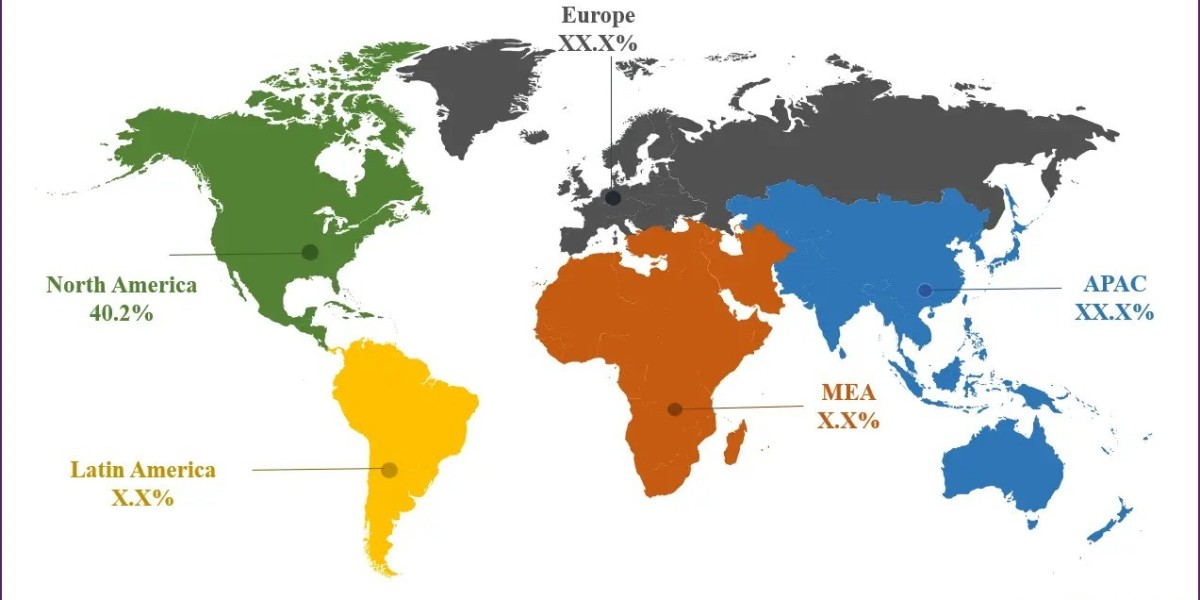
North America is projected to lead the global Industry 4.0 Market with approximately 40.2% of revenue in 2025.
The region benefits from advanced industrial infrastructure, strong technology development capabilities, and substantial investment in manufacturing modernization.
The United States is an important contributor through industrial automation, connected production systems, and enterprise digitalization.
Europe also represents a significant market, supported by established manufacturing industries, robotics adoption, and demand for sustainable industrial operations.
Germany is particularly important due to its advanced automotive, machinery, and industrial engineering capabilities.
Asia-Pacific presents considerable opportunities as countries including China, Japan, South Korea, and India strengthen industrial automation and smart manufacturing capabilities.
Competitive Landscape
The Industry 4.0 Market includes industrial automation suppliers, semiconductor companies, enterprise software providers, and manufacturing technology developers.
Prominent companies identified in the report include Intel Corporation, General Electric (GE), IBM Corporation, Siemens AG, Cisco Systems Inc., Mitsubishi Electric Corporation, Honeywell International Inc., ABB Ltd., Emerson Electric Co., Bosch (Robert Bosch GmbH), Schneider Electric SE, and Rockwell Automation, Inc.
Competition centers on industrial connectivity, automation capabilities, data analytics, interoperability, and integration with existing production infrastructure.
Technology partnerships and integrated solutions are becoming important as manufacturers seek connected platforms rather than isolated digital tools.
Challenges and Future Opportunities
High implementation costs remain a significant challenge, particularly for small and medium-sized manufacturers.
Legacy equipment integration, cybersecurity concerns, workforce training, and data management requirements can also complicate adoption.
However, increasing demand for predictive maintenance, flexible production, and digitally connected operations is creating opportunities for technology suppliers and system integrators.
The continued development of AI-powered automation and industrial analytics is expected to strengthen long-term market adoption.
Explore the Complete Industry 4.0 Market Analysis
Access detailed regional forecasts, component segmentation, technology trends, competitive assessments, and industrial growth opportunities through the complete Dimension Market Research report.
https://dimensionmarketresearch.com/checkout/industry-4-0-market/
Frequently Asked Questions
1. What is the global Industry 4.0 Market size?
The market is projected to reach USD 190.1 billion in 2025 and USD 665.4 billion by 2034.
2. What is the expected CAGR of the Industry 4.0 Market?
The global market is expected to grow at a CAGR of 14.9% during 2025 to 2034.
3. Which component dominates the Industry 4.0 Market?
Hardware leads with an estimated 46.5% market share in 2025.
4. Which region leads the Industry 4.0 Market?
North America is projected to account for 40.2% of global market revenue in 2025.
5. What is driving future Industry 4.0 Market growth?
Industrial IoT, smart factories, AI-powered analytics, robotics, digital twins, and demand for efficient manufacturing support growth.
Conclusion
The Industry 4.0 Market is transforming industrial operations through intelligent automation, connected infrastructure, and data-driven decision-making.
Rising demand for efficient production, predictive maintenance, and advanced manufacturing capabilities is encouraging organizations to accelerate digital transformation.
As AI, robotics, and industrial connectivity technologies continue to advance, Industry 4.0 is expected to create opportunities across manufacturing, technology development, and industrial services.
Related Industrial Automation Market Insights
Industry 5.0 Market Size
The global Industry 5.0 Market is projected to grow from USD 71.1 billion in 2024 to USD 889.8 billion by 2033, registering a CAGR of 32.4%. The market emphasizes human-centric manufacturing, collaboration between workers and intelligent machines, and more sustainable industrial systems.
Germany Industry 4.0 Automation Market Share
The Germany Industry 4.0 Automation Market is projected to expand from USD 21.88 billion in 2026 to USD 47.87 billion by 2035, growing at a CAGR of 9.09%. Industrial hardware systems are expected to dominate the component segment with a 49.3% share in 2026, supported by advanced manufacturing and automation adoption.







