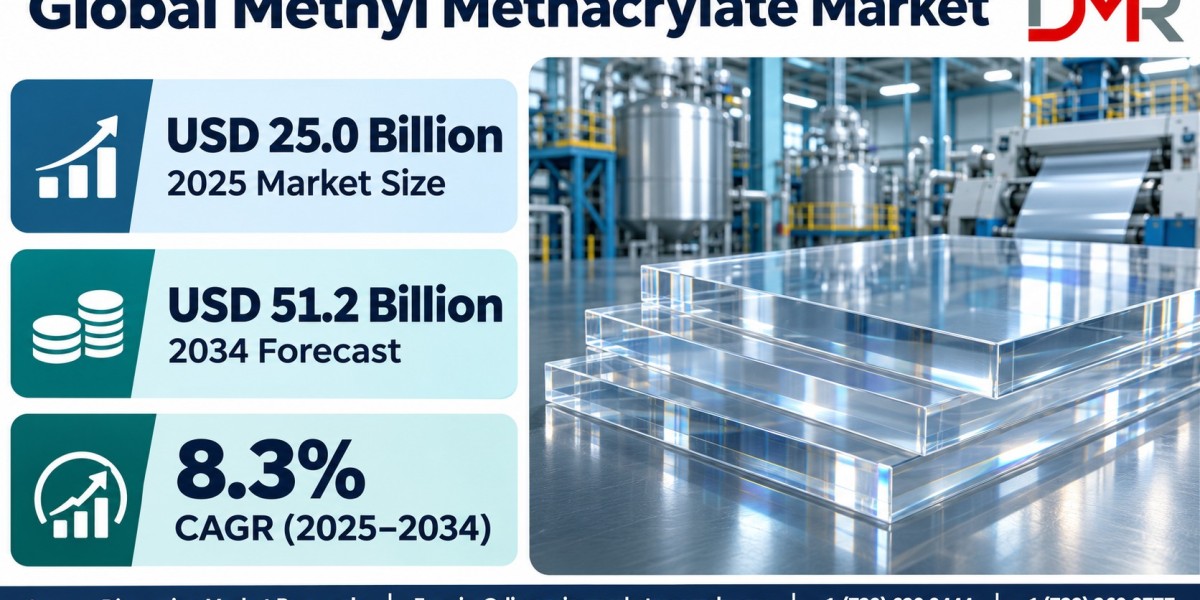

The Methyl Methacrylate Market is expanding as manufacturers use acrylic materials in construction, automotive lighting, signage, and other applications that require clarity and weather resistance. According to Dimension Market Research, the global market was estimated at USD 25.0 billion in 2025 and is projected to reach USD 51.2 billion by 2034, growing at an 8.3% CAGR from 2025 to 2034.
Polymethyl methacrylate, or PMMA, is the largest application for methyl methacrylate. Its use in products ranging from skylights to vehicle lighting gives the market exposure to several industries. For producers, that diversity matters because different applications place different demands on the same material. Construction buyers may prioritize weather resistance, while lighting manufacturers may put more weight on optical clarity and design flexibility.
What Is the Methyl Methacrylate Market?
Methyl methacrylate, commonly called MMA, is a monomer used to make acrylic polymers. PMMA is one of the best-known materials made from it. The report also covers MMA used as a chemical intermediate and in surface coatings and emulsion polymers. Its feedstock analysis covers acetone, ethylene, methanol, and isobutylene. That scope allows buyers to examine demand for downstream products alongside the raw material choices that influence production economics.
Get a Free Sample of the Methyl Methacrylate Market Report
Review how the study breaks down the market by feedstock, application, and geography. The sample can help you identify the sections most relevant to a sourcing review, a capacity expansion, or an assessment of demand for acrylic materials.
https://dimensionmarketresearch.com/request-sample/global-methyl-methacrylate-market/
Why PMMA Leads Methyl Methacrylate Demand
The report identifies PMMA as the largest application for methyl methacrylate. Its combination of optical clarity, resistance to ultraviolet exposure, and a favorable strength-to-weight ratio supports use in acrylic glazing, signage, and automotive lighting. In construction, applications include skylights and noise barriers. In automotive lighting, transparency and design flexibility help explain its use in components that must meet visual and durability requirements.
MMA also serves markets beyond clear plastic products. Surface coatings and adhesives give producers exposure to buyers with different formulation needs. For a supplier deciding where to expand, the application mix can influence which product specifications to prioritize and which customers to target. Demand for acrylic glazing, for example, tells a producer something different about its sales opportunities than demand from a coatings formulator.
Acetone Leads Feedstocks as Producers Evaluate Alternatives
Acetone leads the report’s feedstock analysis, supported by established production routes and existing plant infrastructure. Ethylene and methanol are gaining attention, but DMR identifies capital requirements and technical complexity as barriers to wider adoption. A producer evaluating a different route must consider how it fits the plant, what upgrades it requires, and whether local feedstock supply can support commercial operations.
The report also highlights chemical recycling as an opportunity. Producers are developing routes that convert used PMMA into MMA, creating a potential source of monomer for new acrylic products. For manufacturers assessing this route, the commercial question is whether recovered material can be sourced consistently and converted into monomer that meets customer specifications.
Where Demand Is Concentrated and What Could Limit Growth
North America led the global market with an estimated 40.1% share in 2025. DMR estimated the US market at USD 8.4 billion in 2025, supported by applications in acrylic sheets, coatings, adhesives, and orthopedic materials. The report also highlights opportunities in China, India, and Southeast Asia, where infrastructure development and urbanization support demand for MMA-based products. In Europe, recycling initiatives and interest in lower-emission coatings influence product and process development.
Feedstock price volatility can complicate purchasing and production planning. The report also identifies investment in emissions controls and process upgrades as a cost pressure. Companies covered include Mitsubishi Chemical Group Corporation, Evonik Industries AG, LG Chem Ltd., Sumitomo Chemical Co., Ltd., BASF SE, and Arkema S.A. For buyers evaluating suppliers, these market conditions make supply reliability and consistency of product specifications relevant alongside pricing.
Explore the Complete Methyl Methacrylate Market Analysis
Compare demand by feedstock, application, and region to inform acrylic product planning, supplier assessment, or manufacturing investment.
https://dimensionmarketresearch.com/checkout/global-methyl-methacrylate-market/
Frequently Asked Questions
What is the size of the Methyl Methacrylate Market?
The global market was estimated at USD 25.0 billion in 2025 and is projected to reach USD 51.2 billion by 2034.
What is the projected CAGR?
DMR projects an 8.3% CAGR from 2025 to 2034.
Which application leads the market?
Polymethyl methacrylate leads the application breakdown, supported by demand for products such as acrylic glazing, signage, and vehicle lighting.
Which region has the largest market share?
North America led with an estimated 40.1% share of the global market in 2025.
What are the main constraints on market growth?
Feedstock price volatility and the cost of process upgrades and emissions controls can put pressure on producers.
Conclusion
The outlook through 2034 reflects demand for transparent, durable acrylic products and growing interest in recovering MMA from used PMMA. For producers, the opportunity lies in matching feedstock and production choices to the specifications buyers need in construction, vehicle lighting, coatings, and other downstream applications.