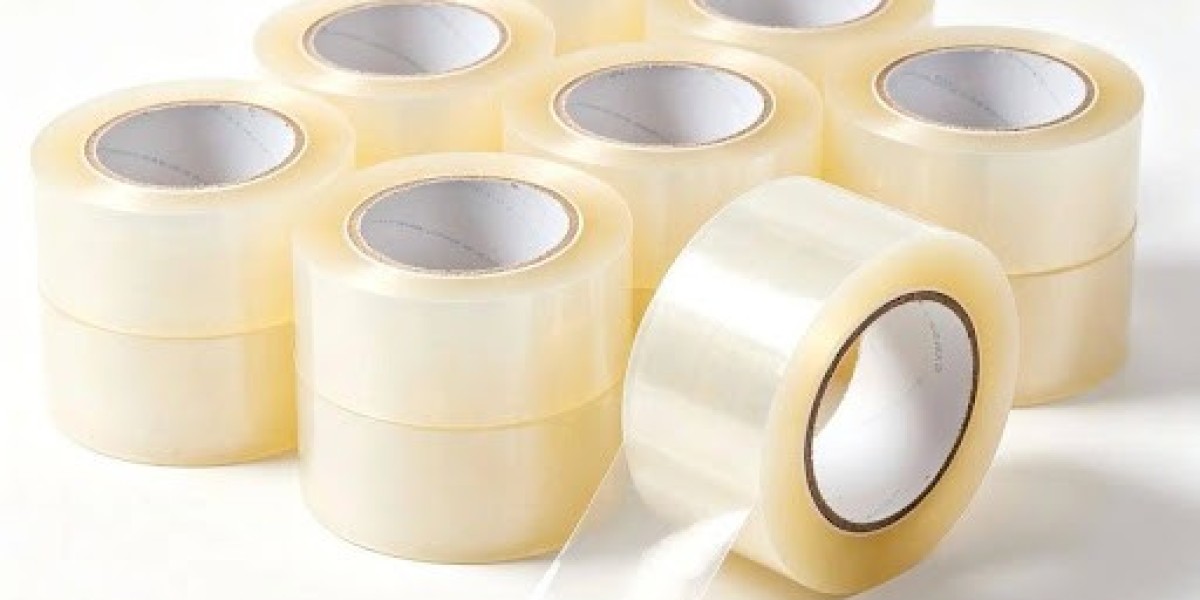

Clear tape beats a sheet of film whenever the area to protect is small, narrow or only at risk for a short while. Think of the side of a bath panel before the wall beside it is painted, a window frame during a quick touch up, a short run of skirting, or the edge of a worktop while tiles are cut nearby. In each case the job takes minutes, and a strip of tape covers it exactly, with nothing to measure, cut or throw away. Film still wins on floors, stairs and big flat surfaces. Tape wins on the small stuff, and on most jobs the small stuff is half the list.
What makes one roll better than another is how it behaves at the two ends of the job. Going on, it should unwind smoothly, stick for the first time and sit flat along an edge without lifting at the corners. Coming off, it should release cleanly and take nothing with it: no adhesive left on the paint, no gloss pulled from a varnished frame. Cheap tape usually fails one end or the other, which is why decorators who use it daily buy from a clear tape for surface protection manufacturer rather than trusting any roll that happens to be in the van. Surface Film Global, for example, supplies it in narrow widths made for exactly this kind of small, quick work.
The one surface jobs film cannot justify
A full sheet of film makes sense across a floor or a bank of windows. It makes very little sense across one pane of glass, the front of one appliance, or the short run of skirting beside a door that is being repainted. In those spots the measuring, cutting and trimming take longer than the protection is worth, and most of the sheet ends in the bin. A strip of clear tape covers the same ground in seconds, follows the edge exactly, and leaves nothing behind to trip over, store or throw away. The job stays small, which was the whole point. Nobody bills a client for protecting one pane.
Seaming and patching the protection you already have
Clear tape spends much of its working life repairing other protection. It joins two sheets of film where a room is wider than the roll. It seals the edge of a sheet against a wall so dust cannot creep underneath. It patches the tear left by a ladder foot, in the minute after it happens, before grit gets in and starts scratching. Every experienced decorator carries it for this reason alone: protection rarely fails in the middle of a sheet. It fails at seams, edges and holes, and tape is the fastest answer to all three. The roll in the toolbox is really an insurance policy. It is the repair kit for protection itself.
Edges, corners and narrow strips
Film is a wide material trying to cover narrow things, and narrow things are everywhere in a finished room. Window frames, door handles, hinges, the reveal around a fitted wardrobe, the chrome edge of a shower screen: each one wants a strip, not a sheet. Tape bends around corners without folding into ridges, sits flat on a frame without bridging, and can be cut with a thumbnail in the middle of a ladder. Used well, it protects the fiddly twenty percent of a room that causes eighty percent of the arguments at handover. Small surfaces cause large complaints. It is patient work, done in centimetres.
What clear tape lets you see
There is one more thing tape does that film usually cannot. It lets you see. Through a clear strip a decorator can read the label on a boiler, check that a painted edge is still wet, or spot the first bead of a leak under a sink before it spreads. Printed warnings, colours and finishes stay visible instead of vanishing under an opaque sheet, which is why tape is the default on appliances, control panels and anything with instructions on it. Protection that hides the surface also hides the early signs of trouble on it. Seeing is a form of protection too.
Knowing where tape is not enough
Honesty matters here, because tape has limits and pretending otherwise wastes jobs. It is not a floor covering, and a strip across a walkway will be shredded by boots and grit within the day. It will not hold a sheet down through a week of wet trades, and on rough or dusty surfaces its grip gives up early. The skill is in the choosing: tape for the small, the narrow, the quick and the temporary, film for the wide, the walked on and the long lasting. Most rooms need both, each where it belongs. That judgement is most of the craft.
A small roll that saves large sheets
The arithmetic is simple. Every small job done with tape is a sheet of film that stays on the roll for a job that truly needs it, a pile of offcuts that never reaches the bin, and ten minutes that stay in the day. Sites run on hundreds of these small decisions, and the tidy ones are easy to recognise: the protection fits the job, never the other way round. Keep a roll of clear tape within reach, and half the protection problems on a small job solve themselves. That is all tape has ever promised, and it is enough.







