
Introduction
Manufacturing organizations operate in an environment where even minor disruptions can lead to significant financial losses. Equipment failures, obsolete components, inconsistent quality, and incomplete engineering documentation continue to challenge production teams across industries.
To address these challenges, manufacturers are increasingly turning to reverse engineering services as a strategic engineering practice rather than simply a method of copying parts. By converting existing physical components into accurate digital models, reverse engineering helps businesses improve reliability, reduce uncertainty, and make informed engineering decisions.
Today, organizations across automotive, aerospace, heavy engineering, energy, industrial machinery, and medical device sectors rely on reverse engineering to strengthen manufacturing resilience while supporting modernization initiatives.
Understanding Reverse Engineering Services
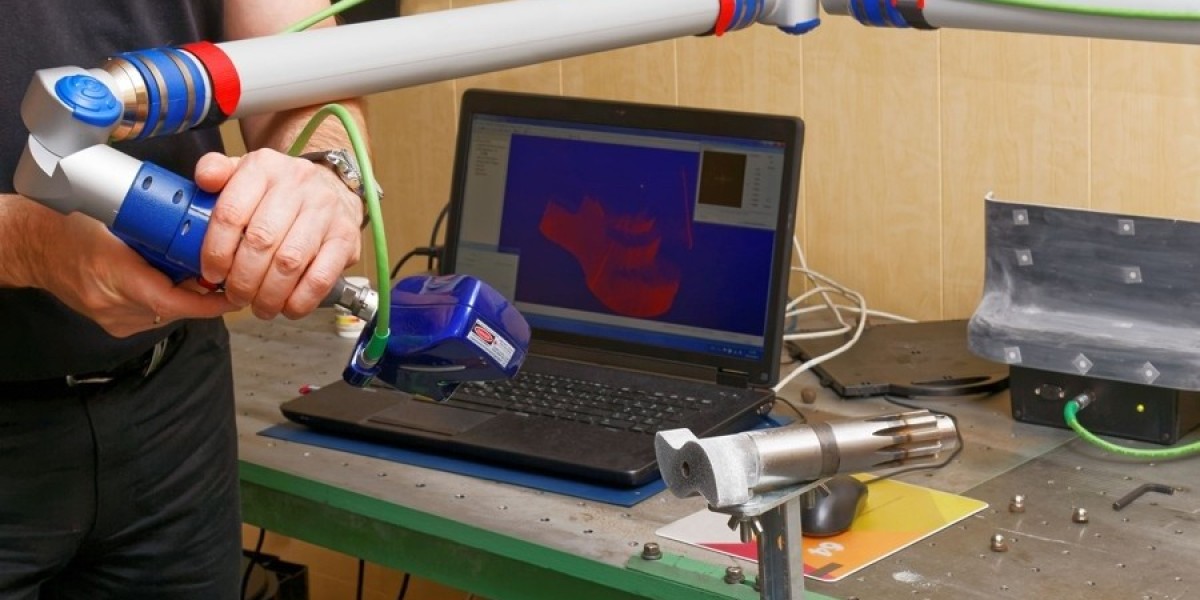
Reverse engineering is the process of analyzing an existing physical object to recreate its design, geometry, dimensions, and engineering data. Advanced technologies such as laser scanning, structured-light scanning, and coordinate measuring systems capture precise physical information.
The collected data is then converted into detailed CAD models, engineering drawings, inspection reports, or digital twins that can be used throughout the product lifecycle.
Modern reverse engineering services have evolved beyond part replication. They now support product redesign, quality improvement, maintenance planning, digital transformation, and manufacturing optimization.
Why Manufacturing Risks Continue to Increase
Modern manufacturing has become increasingly complex due to global supply chains, customized production, and shorter product development cycles.
Organizations often encounter challenges such as:
Discontinued or obsolete components
Missing CAD files or technical drawings
Aging production equipment
Supplier dependency
Unexpected equipment downtime
Design inconsistencies
Increasing quality expectations
These risks directly affect operational efficiency, production schedules, and profitability.
Reverse engineering provides manufacturers with reliable engineering data that reduces uncertainty across multiple stages of production.
Recovering Critical Engineering Data
One of the most common manufacturing risks is the loss of original design documentation.
Older equipment may have incomplete drawings, outdated revisions, or no digital records at all. Without accurate engineering information, maintenance and replacement activities become expensive and time-consuming.
Reverse engineering recreates complete digital models from existing components, allowing manufacturers to restore valuable engineering knowledge without relying on outdated documentation.
This digital foundation supports future upgrades, redesigns, and maintenance activities.
Reducing Downtime Through Faster Part Replacement
Unexpected equipment failures remain one of the costliest manufacturing risks.
When replacement parts are unavailable or discontinued, production may stop for days or even weeks while alternatives are sourced.
Reverse engineering enables damaged or obsolete components to be digitally recreated with high accuracy. Manufacturers can quickly produce replacement parts using conventional machining or additive manufacturing methods.
This significantly reduces production interruptions and improves operational continuity.
Minimizing Supplier Dependency
Many manufacturers rely heavily on original equipment manufacturers (OEMs) for spare parts and technical support.
This dependency can create long lead times, increased procurement costs, and limited flexibility.
Reverse engineering provides manufacturers with independent engineering data that allows qualified suppliers to reproduce compatible components when necessary.
As a result, organizations gain greater supply chain resilience while reducing procurement risks.
Improving Manufacturing Quality
Manufacturing defects often originate from dimensional variations that remain undetected during production.
Reverse engineering combined with precision scanning technologies enables detailed comparison between manufactured parts and original design intent.
Engineers can identify dimensional deviations, wear patterns, and assembly issues before they become major quality problems.
Improved measurement accuracy leads to more consistent production outcomes and lower rejection rates.
Supporting Legacy Equipment Modernization
Many industrial facilities continue operating machinery that has delivered reliable performance for decades.
However, maintaining legacy equipment becomes increasingly difficult as original documentation disappears and spare parts become unavailable.
Reverse engineering allows manufacturers to digitize existing assemblies and create updated engineering models for modernization projects.
Rather than replacing entire production systems, organizations can upgrade individual components while extending equipment life.
Strengthening Product Development
Manufacturing risks often emerge during new product development due to design assumptions and insufficient validation.
Reverse engineering allows engineers to analyze existing products, benchmark successful designs, and understand real-world performance characteristics.
These insights improve design accuracy while reducing costly iterations during product development.
Engineering teams can also identify opportunities for weight reduction, material optimization, and manufacturing simplification.
Enhancing Quality Inspection Processes
Quality assurance increasingly depends on accurate digital inspection rather than manual measurement methods.
Reverse engineering creates highly accurate digital reference models that support comprehensive dimensional inspections.
Engineers can compare manufactured components against CAD models to detect deviations at every stage of production.
This proactive approach reduces scrap, minimizes rework, and improves customer satisfaction.
Enabling Digital Manufacturing
Digital manufacturing depends on accurate digital representations of physical assets.
Reverse engineering bridges the gap between physical components and digital engineering environments.
Captured data supports simulation, finite element analysis, process optimization, digital twins, and virtual manufacturing workflows.
This enables manufacturers to make data-driven decisions while reducing operational uncertainty.
Improving Risk Management During Product Lifecycle
Manufacturing risks extend beyond production into maintenance, servicing, and lifecycle management.
Reverse engineering helps organizations maintain complete digital records throughout the operational life of equipment.
Engineers can continuously update design information based on field inspections, wear analysis, and maintenance observations.
This creates a reliable engineering database that supports predictive maintenance strategies and informed decision-making.
Reverse Engineering and Sustainability
Risk reduction is closely connected to sustainability.
Replacing complete assemblies because of one unavailable component increases material consumption, production costs, and environmental impact.
Reverse engineering enables manufacturers to repair, reproduce, and optimize existing components rather than replacing entire systems.
Extending product life while minimizing waste supports both operational efficiency and sustainable manufacturing goals.
Why Precision Matters
The effectiveness of reverse engineering depends on the quality of captured data.
Modern laser scanning technologies generate millions of measurement points within minutes, producing highly accurate digital representations of complex geometries.
This precision improves design confidence while reducing engineering assumptions throughout manufacturing processes.
Accurate data ultimately leads to better production decisions and lower operational risks.
The Growing Importance of Reverse Engineering Services in Chennai
India continues to strengthen its position as a global manufacturing hub, driving increased demand for advanced engineering capabilities.
As industries modernize production facilities and digitize legacy assets, reverse engineering services in Chennai are becoming increasingly important for automotive, aerospace, heavy engineering, electronics, and industrial manufacturing sectors.
Organizations seeking higher productivity and reduced operational risks are investing in digital engineering solutions that improve equipment reliability and manufacturing accuracy.
The expanding adoption of reverse engineering services in Chennai reflects the broader shift toward data-driven manufacturing, predictive maintenance, and Industry 4.0 initiatives.
Future Outlook
Manufacturing risks will continue evolving as products become more complex and production systems become increasingly interconnected.
Reverse engineering will play a central role in supporting digital twins, AI-assisted engineering, advanced inspection, automated manufacturing, and sustainable production.
Organizations that invest in accurate engineering data today will be better positioned to adapt to future technological changes while minimizing operational uncertainty.
Conclusion
Manufacturing success depends on making informed engineering decisions supported by reliable data.
Reverse engineering transforms physical components into accurate digital assets that reduce downtime, improve quality, support modernization, strengthen supply chain resilience, and extend equipment life.
As manufacturing continues moving toward digital transformation, reverse engineering will remain an essential capability for reducing operational risks and improving long-term competitiveness.
R M Engineering Technologies is a specialist provider of on-site, mobile laser scanning services. We deliver a fast and cost-effective solution for the collection of physical data of an object in any desired environment.