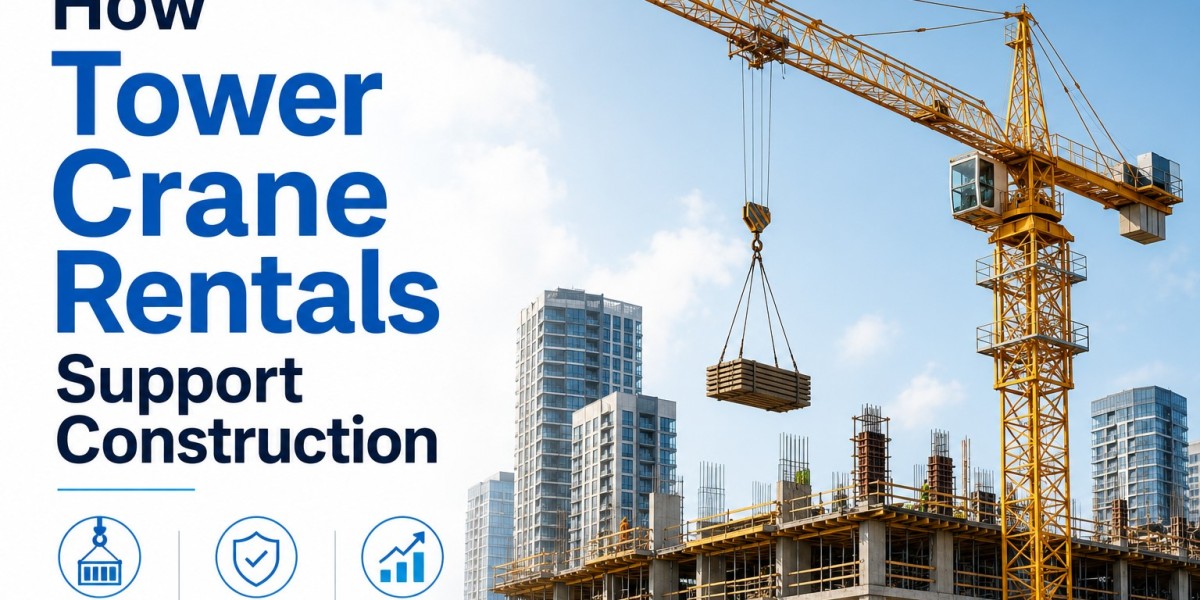

Tower crane rentals are becoming important for construction projects that need heavy lifting capacity without the full cost of equipment ownership. These cranes are used to move steel, concrete, formwork, machinery, prefabricated components, and other materials on high-rise buildings, infrastructure projects, industrial facilities, and large commercial developments. Rental models help contractors access suitable equipment for specific project timelines, site layouts, and lifting requirements.
A recent tower crane rental industry study by MarkNtel Advisors highlights steady demand from Asia-Pacific construction activity, hammerhead tower cranes, and non-residential projects. The study values the sector at USD 16.98 billion in 2025 and projects it to grow from USD 17.19 billion in 2026 to USD 25.98 billion by 2032, reflecting a CAGR of around 7.13% during 2026–2032.
Rental Models Improve Project Flexibility
Tower cranes are expensive assets that require transport, installation, operation, maintenance, inspection, dismantling, and storage. For many contractors, renting is more practical than owning because equipment needs vary by project size, height, load, and duration. Rental companies can provide cranes suited to each job instead of forcing contractors to use owned equipment that may not fully match site needs.
Rental also helps reduce idle equipment risk. A crane may be needed intensively during structural work but not throughout the entire construction schedule. By renting, contractors can align equipment use with project phases and manage capital more efficiently.
Asia-Pacific Holds a Strong Position
Asia-Pacific accounted for approximately 43% share in 2026, according to the report. The region’s position is supported by high construction activity, urban expansion, commercial developments, transport infrastructure, industrial projects, and large-scale residential construction in countries such as China, India, Indonesia, Vietnam, Japan, South Korea, and Australia.
The Asian Development Bank’s infrastructure work highlights the importance of transport, energy, urban, and water systems across the region. Tower crane rentals support this broader construction environment by helping contractors manage complex lifting work on large and vertical projects.
Hammerhead Cranes Lead Demand
Hammerhead tower cranes accounted for around 38% share in 2026, making them a leading crane type in the report. These cranes are widely used because they offer strong lifting capacity, stable horizontal jib movement, and suitability for high-rise and large building projects. Their structure makes them familiar across many construction sites.
Hammerhead cranes are especially useful where repetitive lifting is required over a defined site area. They can support structural steel, concrete buckets, formwork systems, and heavy building materials. However, selecting the right crane depends on load chart, working radius, height, foundation conditions, and surrounding site constraints.
Non-Residential Projects Drive Use
Non-residential construction accounted for approximately 73% share in 2026, according to the shared study. This includes offices, malls, hotels, hospitals, airports, factories, warehouses, education buildings, public infrastructure, and industrial facilities. These projects often require heavy lifting, tight scheduling, and coordinated material movement.
Large non-residential sites may use multiple cranes depending on building footprint and project complexity. Rental providers often support planning by advising on crane positioning, lifting capacity, assembly requirements, and dismantling strategies. Better planning helps reduce delays and improves site productivity.
Safety Remains Central to Operations
Tower crane work involves significant safety responsibilities because cranes operate at height, move heavy loads, and often work near workers, structures, roads, and other equipment. Safe operation depends on certified operators, proper rigging, wind monitoring, load limits, routine inspections, and clear communication between site teams.
The Occupational Safety and Health Administration’s crane safety information outlines key safety considerations for crane and derrick operations. This context matters because tower crane rentals must include not only equipment availability but also safe installation, operation, maintenance, and compliance practices.
Urban Construction Increases Complexity
Urban construction sites often have limited space, nearby buildings, traffic restrictions, utility lines, and strict scheduling requirements. Tower cranes help move materials vertically and horizontally when ground-level movement is difficult. This makes them useful for dense city projects where efficient lifting can reduce congestion at the site level.
However, urban crane operations require careful coordination. Permits, road closures, lifting plans, noise limits, wind conditions, and neighbor safety must be managed properly. Rental companies with strong project experience can help contractors address these practical challenges more effectively.
Technology Improves Fleet Management
Digital tools are improving how tower cranes are managed. Telematics, sensors, remote monitoring, anti-collision systems, load indicators, and maintenance software can help track crane performance, operating hours, safety alerts, and service needs. These tools support better visibility for both rental companies and contractors.
Data can also help reduce downtime. When maintenance teams detect wear, overload patterns, or abnormal performance early, they can plan service before equipment failure occurs. This is important on construction sites where crane downtime can affect multiple trades and delay project schedules.
Competition Reflects Service Capability
The report notes that the top five companies account for nearly 22% combined share, indicating a competitive environment with global rental providers, regional equipment companies, and local crane specialists. Competition is shaped by fleet size, crane availability, technical support, operator services, safety record, pricing, and geographic coverage.
Customers often value providers that can support the full rental lifecycle, including site assessment, crane selection, transport, erection, inspection, maintenance, and dismantling. In tower crane rental, service reliability can be as important as the crane itself because project delays can create significant costs.
Outlook for Tower Crane Rentals
Tower crane rental demand is being shaped by Asia-Pacific construction activity, hammerhead crane use, non-residential projects, urban development, safety requirements, and digital fleet management. The report figures indicate steady growth through 2032 as contractors continue seeking flexible access to lifting equipment.
The long-term direction will depend on construction spending, infrastructure investment, equipment availability, safety standards, skilled operators, and rental fleet modernization. As building projects become taller, denser, and more complex, tower crane rentals will remain important for supporting efficient and safe material movement on construction sites.