
Users expect products that are not only functional but also simple, intuitive, and visually engaging. Whether it's a mobile application, a SaaS platform, an e-commerce website, or enterprise software, the success of a product largely depends on its design. Product design is more than just creating an attractive interface—it is about solving real problems, improving user experiences, and aligning business goals with customer needs. A well-designed product helps businesses attract new users, retain existing customers, and stand out in a competitive market.
What Is Product Design?
Product design is the process of creating digital or physical products that meet user expectations while fulfilling business objectives. It involves researching user needs, planning the product structure, designing user experiences, and developing visually appealing interfaces. Every stage of product design focuses on making the product easy to understand, efficient to use, and enjoyable for customers. Rather than simply adding features, product design ensures that every element serves a meaningful purpose and contributes to a better overall experience.
Why Product Design Is Important
A great product idea alone is not enough to guarantee success. If users find a product confusing, slow, or difficult to navigate, they are likely to stop using it and switch to alternatives. Effective product design helps eliminate these challenges by creating intuitive experiences that keep users engaged. It improves customer satisfaction, builds trust, increases conversions, and strengthens brand identity. For businesses, investing in product design also reduces development costs by identifying potential issues before the product is built.
Understanding the Product Design Process
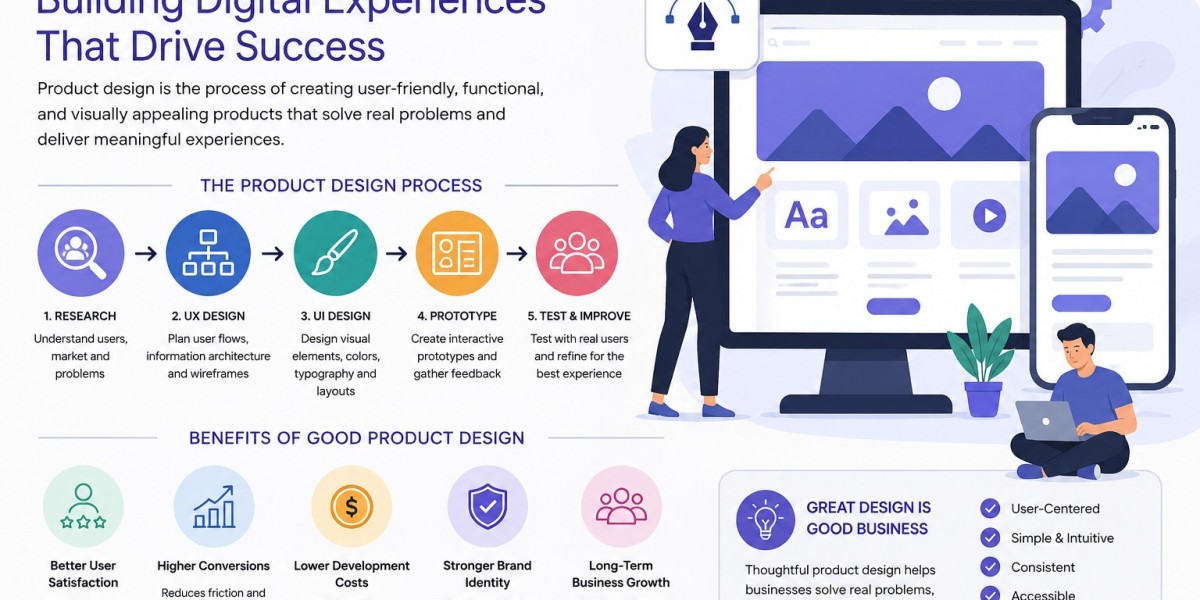
The product design process follows a structured approach that helps transform ideas into successful products. It begins with research, where designers gather insights about the target audience, market trends, and competitor offerings. This information helps define the product's goals and identify the problems it needs to solve.
The next step focuses on user experience (UX) design. Designers create user journeys, organize information, and map out workflows to ensure that users can complete tasks easily and efficiently. Once the overall experience is defined, attention shifts to user interface (UI) design, where visual elements such as colors, typography, icons, buttons, and layouts are developed to create an attractive and consistent look.
Before the product enters development, designers build wireframes and interactive prototypes. These allow stakeholders and users to test the product's functionality and provide feedback. By making improvements at this stage, businesses can reduce risks, save time, and avoid costly revisions during development.
Key Principles of Effective Product Design
Successful product design is based on several important principles that help create meaningful user experiences. First, every decision should be user-centered, ensuring the product solves genuine customer problems. Simplicity is another essential principle, as clean layouts and straightforward navigation make products easier to use. Consistency across all screens and features helps users interact with the product confidently, while accessibility ensures that people with different abilities can use it comfortably. Finally, scalable design allows products to grow and evolve without compromising usability or performance.
Benefits of Investing in Product Design
Businesses that prioritize product design gain significant advantages over their competitors. A well-designed product improves customer satisfaction by making every interaction smooth and enjoyable. Happy users are more likely to remain loyal, recommend the product to others, and continue using it over time.
Product design also contributes to higher conversion rates by reducing friction during onboarding, purchasing, or other key user actions. Since design issues are identified early through testing and prototyping, development becomes more efficient and cost-effective. In addition, strong product design enhances brand credibility, helping businesses establish a professional image and build lasting customer relationships.
Emerging Trends in Product Design
As technology continues to evolve, product design is adapting to meet changing user expectations. Artificial intelligence is enabling more personalized user experiences, while responsive and mobile-first design ensures products perform seamlessly across devices. Minimalist interfaces remain popular because they reduce complexity and improve usability. Accessibility is becoming a standard requirement, ensuring products are inclusive for users of all abilities. Designers are also incorporating micro-interactions, animations, and personalized experiences to make digital products more engaging and interactive.
The Importance of Collaboration
Creating a successful product requires collaboration between multiple teams, including designers, developers, product managers, marketers, and business stakeholders. Each team brings valuable expertise that contributes to the final product. Continuous communication throughout the design process ensures that user needs, technical requirements, and business objectives remain aligned. This collaborative approach leads to better decision-making, faster development, and higher-quality products.
Conclusion
Product design is a strategic process that goes far beyond creating attractive visuals. It combines research, creativity, technology, and user-centered thinking to develop products that solve real problems and deliver meaningful experiences. From understanding customer needs to designing intuitive interfaces and continuously improving through feedback, every stage of product design contributes to the product's overall success.
As digital experiences become increasingly important, businesses that invest in high-quality product design are better equipped to attract users, improve customer satisfaction, and achieve sustainable growth. By focusing on usability, innovation, and continuous improvement, organizations can create products that not only meet customer expectations but exceed them, building lasting value for both users and the business.