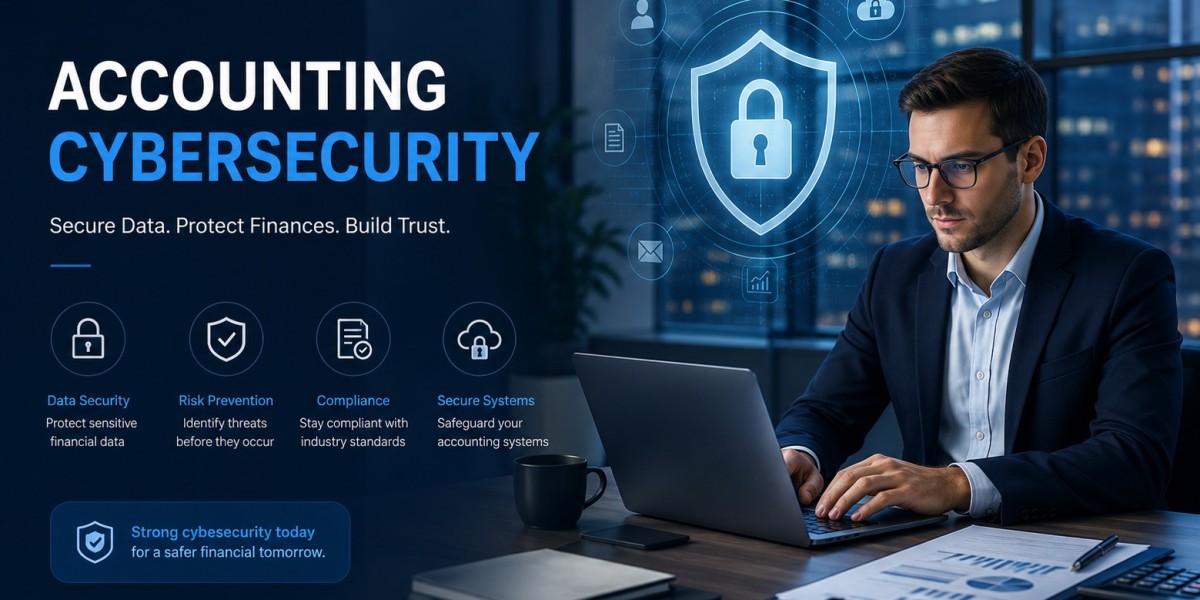

Cloud-based accounting systems have transformed how businesses manage financial data. Accounting teams can access records, collaborate with colleagues, automate processes, and work remotely without relying on traditional on-premise servers. However, greater accessibility also creates cybersecurity risks.
Financial systems contain sensitive information, including bank details, payroll records, tax documents, customer information, invoices, and business financial statements. If these systems are compromised, businesses can face financial losses, operational disruption, regulatory issues, and reputational damage.
For this reason, accounting cybersecurity should be treated as an essential part of financial management—not simply an IT responsibility.
Why Cloud-Based Accounting Systems Need Strong Security
Cloud accounting platforms offer several advantages, but they can also become attractive targets for cybercriminals. Attackers may attempt to gain access through stolen passwords, phishing emails, malware, compromised devices, or poorly configured user permissions.
Even when a reputable cloud provider has strong infrastructure security, businesses are still responsible for protecting their accounts, users, devices, and access controls.
A single compromised employee account could potentially provide unauthorized access to sensitive financial information. Strong accounting cybersecurity therefore requires multiple layers of protection.
1. Use Multi-Factor Authentication
One of the simplest ways to strengthen cloud accounting security is to enable multi-factor authentication (MFA).
MFA requires users to provide additional verification beyond a password. Depending on the platform, this could include an authentication app, security key, or verification code.
Even if a cybercriminal obtains an employee's password, MFA can make unauthorized access significantly more difficult.
Businesses should enable MFA for:
- Accounting software
- Banking platforms
- Payroll systems
- Email accounts
- Cloud storage
- Administrative accounts
- Tax and financial applications
MFA should be considered a standard security requirement for anyone who has access to financial systems.
2. Create Strong Access Controls
Not every employee needs access to every financial record. Giving users more access than necessary increases the potential impact of a compromised account.
Businesses should implement role-based access controls that limit users according to their responsibilities.
For example, an accounts payable employee may need access to vendor invoices but may not need permission to modify payroll records or banking information.
Regularly review user permissions and remove access when employees change roles or leave the organization.
This approach follows the principle of least privilege: users should receive only the access they need to perform their jobs.
3. Protect Financial Data With Encryption
Encryption helps protect financial information while it is being transmitted and stored.
Cloud accounting providers typically use encryption as part of their infrastructure security, but businesses should also understand how their providers protect sensitive information.
Financial data should be protected during activities such as:
- Online transactions
- File transfers
- Cloud backups
- Remote access
- Data storage
- Communication between applications
Businesses should also avoid storing sensitive financial information in unsecured personal devices, USB drives, or unauthorized cloud storage platforms.
4. Train Employees to Recognize Phishing Attacks
Technology alone cannot prevent every cybersecurity incident. Employees remain an important part of an organization's security strategy.
Phishing attacks frequently attempt to trick employees into revealing passwords, opening malicious attachments, transferring money, or providing confidential information.
Accounting departments can be particularly attractive targets because employees regularly handle invoices, payments, banking information, and vendor communications.
Employees should be trained to recognize suspicious messages, including emails that:
- Create unusual urgency
- Request payment changes
- Ask for passwords
- Contain unexpected attachments
- Use unfamiliar sender addresses
- Request confidential financial information
Employees should also verify unusual payment or bank-account-change requests through an independent communication channel.
5. Keep Accounting Software and Devices Updated
Cybercriminals often exploit known vulnerabilities in outdated software.
Businesses should maintain a regular update schedule for operating systems, accounting applications, browsers, security software, and other tools used to access financial systems.
Automatic updates should be enabled whenever practical. Security patches should not be delayed unnecessarily, particularly for applications that handle sensitive financial information.
Businesses should also ensure that employees use supported devices with current security protections when accessing cloud accounting platforms.
6. Maintain Secure Backups
Cloud-based accounting does not eliminate the need for a backup strategy.
Businesses should maintain reliable backups of critical financial information and ensure that backups cannot easily be modified or deleted by unauthorized users.
A strong backup strategy should include:
- Regular automated backups
- Secure backup storage
- Access restrictions
- Backup monitoring
- Periodic restoration testing
Testing backups is particularly important. A backup that cannot be successfully restored during an emergency does not provide much practical protection.
7. Monitor Financial Activity
Cybersecurity is not only about preventing unauthorized access. Businesses should also identify suspicious activity as quickly as possible.
Accounting teams should monitor unusual login activity, unexpected changes to financial records, new user accounts, modified vendor information, and unusual payment requests.
Where available, organizations should use audit logs and security alerts to identify potentially suspicious behavior.
For example, an unexpected change to a vendor's bank account followed by a payment request should receive additional verification before funds are transferred.
8. Secure Third-Party Integrations
Modern accounting systems often connect with payroll platforms, payment processors, banking applications, CRM systems, expense management tools, and other business applications.
These integrations improve efficiency but can introduce additional security risks.
Businesses should regularly review connected applications and remove integrations that are no longer required. Before connecting a new application, evaluate its security practices, permissions, authentication methods, and data-handling policies.
Only grant third-party applications the permissions they actually need.
9. Develop an Incident Response Plan
Even businesses with strong cybersecurity controls should prepare for the possibility of an incident.
An accounting cybersecurity incident response plan should explain what employees need to do if an account is compromised, suspicious activity is detected, or financial information may have been exposed.
The plan should identify:
- Who is responsible for responding
- How compromised accounts will be secured
- How financial transactions will be reviewed
- Who should be notified
- How evidence will be preserved
- How business operations will continue
- How the incident will be reviewed afterward
Having a documented plan can reduce confusion and response time during a cybersecurity incident.
Building a Stronger Accounting Cybersecurity Strategy
Securing cloud-based financial systems requires a combination of technology, employee awareness, access management, monitoring, and regular reviews.
Businesses should start with the fundamentals: enable MFA, use strong passwords, restrict user permissions, update software, protect devices, maintain backups, train employees, and monitor financial activity.
Cybersecurity should also be reviewed regularly as the organization grows. New employees, applications, vendors, integrations, and remote-work arrangements can all introduce new risks.
Final Thoughts
Cloud-based accounting systems provide businesses with flexibility, automation, and accessibility, but protecting financial information requires deliberate cybersecurity practices. A strong security strategy can help reduce unauthorized access, prevent costly mistakes, and protect sensitive financial records.
By combining secure authentication, appropriate access controls, employee training, encryption, backups, monitoring, and an effective incident response plan, businesses can build a more resilient financial environment.
Accounting cybersecurity is not a one-time project. It is an ongoing process that should evolve alongside the technology and financial operations of the business.