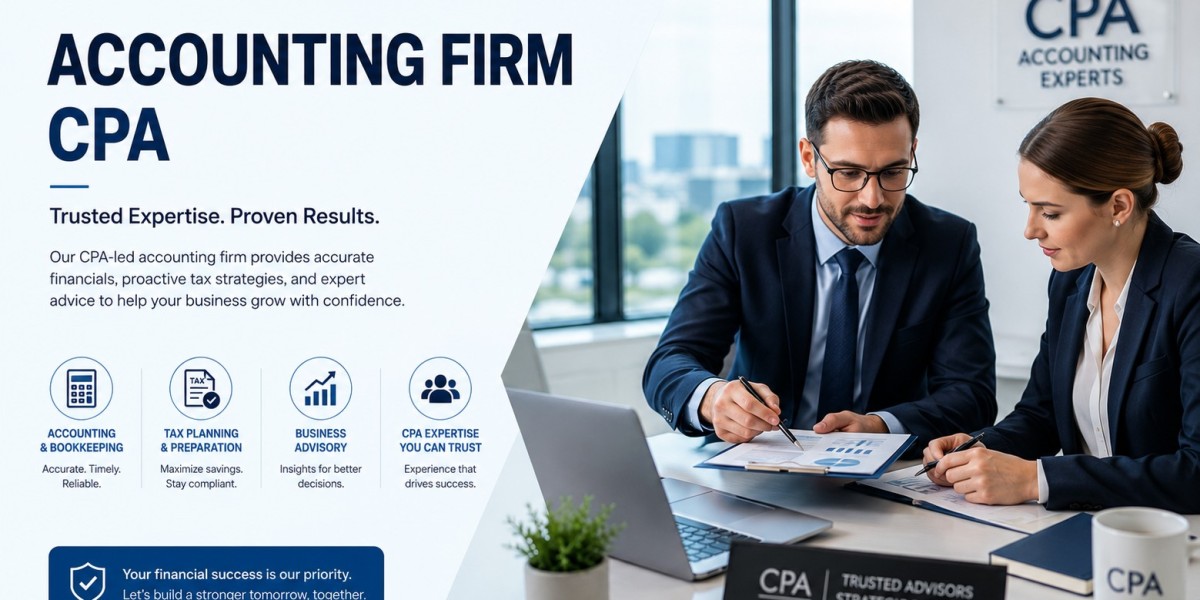

Finding the right CPA firm can become increasingly important as a business grows. Accounting needs that were once manageable with basic bookkeeping may eventually include tax planning, financial reporting, payroll, compliance, cash flow management, and strategic financial advice.
The right CPA firm can provide more than tax preparation. It can become a valuable financial partner that helps your business stay compliant, improve financial visibility, and make better decisions.
However, not every CPA firm is the right fit for every business. Before making a decision, business owners should evaluate experience, services, technology, communication, pricing, security, and scalability.
Here is a practical guide to finding a reliable CPA firm for a growing business.
1. Identify Your Accounting Needs First
Before searching for a CPA firm, determine exactly what your business needs.
Some companies may only require tax preparation and annual filings, while others need ongoing accounting support.
Consider whether you need:
- Bookkeeping
- Tax preparation and planning
- Payroll support
- Accounts payable management
- Accounts receivable management
- Bank reconciliation
- Financial reporting
- Cash flow management
- Controller services
- CFO advisory
- Business tax compliance
- Financial forecasting
Creating a list of your current and future requirements makes it easier to compare CPA firms.
It also helps prevent you from paying for services your business does not actually need.
2. Look for Experience With Businesses Like Yours
Industry experience can be valuable when selecting a Accounting firm cpa.
A firm that understands your industry may already be familiar with common accounting challenges, tax considerations, reporting requirements, and financial benchmarks.
For example, a technology startup may have different accounting requirements from a real estate company or professional services business.
Ask prospective CPA firms about their experience with businesses similar to yours.
You can ask:
- How many businesses like mine do you currently serve?
- Do you have experience with my industry?
- What accounting challenges do you commonly see in this industry?
- Can you provide relevant client references?
The goal is to find a firm that understands both accounting and your business environment.
3. Evaluate the Firm's Qualifications
Credentials matter when choosing a CPA firm.
Check whether the firm's professionals have appropriate qualifications and experience. You should also verify that the firm is properly licensed and in good standing with the relevant professional authorities.
However, qualifications should not be the only consideration.
Look at the firm's practical experience, service capabilities, reputation, communication standards, and ability to support your company's growth.
A strong combination of credentials and practical business experience is generally more valuable than either one alone.
4. Check the Range of Services
Your accounting requirements may become more complex as your business grows.
A firm that only provides basic tax preparation may not be able to support you when you need financial forecasting, controller services, or advisory support.
Ask whether the firm can provide additional services as your business expands.
A scalable CPA relationship can reduce the need to find and transition to a new provider every time your accounting needs change.
5. Ask About Technology
Modern accounting relies heavily on technology.
Cloud accounting platforms, automated bookkeeping, digital document management, expense management tools, payroll systems, and financial dashboards can improve efficiency and accuracy.
Ask prospective CPA firms which accounting platforms they use and how they manage technology.
Important questions include:
- Which accounting software do you support?
- How do you handle document sharing?
- Do you use automation?
- How often are financial reports updated?
- Can we access financial information remotely?
- How do you protect sensitive financial data?
A CPA firm should be comfortable using modern technology while maintaining appropriate security practices.
6. Prioritize Data Security
CPA firms handle sensitive financial and personal information, making cybersecurity an important consideration.
Before sharing confidential information, ask how the firm protects client data.
Look for security practices such as:
- Multi-factor authentication
- Secure document portals
- Data encryption
- Strong access controls
- Regular software updates
- Secure backups
- Employee cybersecurity training
You should also understand who has access to your financial information and how that access is managed.
Strong accounting cybersecurity is particularly important for businesses that share sensitive documents electronically.
7. Understand Communication Expectations
Good communication can make a significant difference in an accounting relationship.
A CPA firm may have excellent technical expertise, but if it is difficult to contact the team or slow to respond, the relationship can become frustrating.
Ask how communication works before signing an agreement.
Find out:
- Who will be your primary contact?
- How quickly are questions typically answered?
- How often will you receive financial reports?
- Will you have regular meetings?
- Can you contact the CPA directly when necessary?
Clear expectations from the beginning can help prevent communication problems later.
8. Compare Pricing Carefully
Price should be considered, but it should not be the only deciding factor.
CPA firms may charge fixed monthly fees, hourly rates, project-based fees, or a combination of pricing models.
Ask for a clear explanation of what is included.
For example, determine whether the quoted price covers bookkeeping, tax preparation, financial statements, consultations, payroll support, and other services.
Also ask about additional charges.
The cheapest firm may not provide the level of expertise or service your growing business needs. Instead, focus on overall value and whether the services align with your business requirements.
9. Ask About Scalability
A growing business needs an accounting partner that can grow with it.
Your transaction volume may increase. You may hire more employees, enter new markets, acquire another company, or expand your tax and reporting requirements.
Ask prospective CPA firms how they handle growing clients.
A scalable firm should have the people, processes, technology, and expertise to support increasing complexity.
This can help you avoid switching providers just when your business is entering an important growth phase.
10. Read Reviews and Request References
Online reviews can provide useful information about a CPA firm's reputation, but they should not be your only source of information.
Ask the firm whether it can provide references from businesses with similar needs.
When speaking with references, ask about:
- Quality of accounting work
- Responsiveness
- Communication
- Accuracy
- Problem-solving
- Pricing transparency
- Ability to meet deadlines
- Overall experience
Real client experiences can provide insights that may not be obvious during an initial sales conversation.
11. Watch for Red Flags
Some warning signs should make you reconsider a potential CPA firm.
Be cautious if a firm:
- Cannot clearly explain its services
- Avoids questions about pricing
- Has poor communication
- Does not prioritize data security
- Makes unrealistic promises
- Has unclear engagement terms
- Cannot explain who will handle your account
- Has limited experience with businesses like yours
A professional CPA firm should be transparent about its services, responsibilities, pricing, and processes.
12. Consider the Long-Term Relationship
Choosing a CPA firm should not be treated as a short-term purchasing decision.
Your accounting provider may eventually gain a deep understanding of your business, financial history, tax position, and growth plans.
The right firm can become a long-term financial resource.
Look for a provider that is willing to understand your goals rather than simply completing accounting tasks.
A good CPA relationship should help you answer questions such as:
- Are we generating enough cash flow?
- Where can we reduce unnecessary costs?
- Are we prepared for upcoming tax obligations?
- What financial risks should we address?
- Can we afford our next stage of growth?
Final Thoughts
Finding a reliable CPA firm requires more than comparing prices. Growing businesses should evaluate a firm's experience, service offerings, technology, security, communication, pricing structure, and ability to scale.
Start by clearly defining your accounting needs, then compare firms based on the value and expertise they can provide.
The right CPA firm should not only help keep your financial records accurate and taxes compliant. It should give you better financial visibility, reduce administrative pressure, and provide expertise that supports long-term business growth.
By taking the time to evaluate potential CPA firms carefully, you can build a financial partnership that supports your business today and continues to deliver value as your company grows.