
The Two-Flour Kitchen Strategy That Nutritionally Savvy Indian Households Are Adopting
There's a simplification that most conversations about healthy Indian cooking make — the assumption that switching from regular refined wheat flour to one better alternative solves the daily nutrition puzzle. The reality of how different household members use flour, what different meals require, and what different health goals demand is more nuanced than a single flour can address.
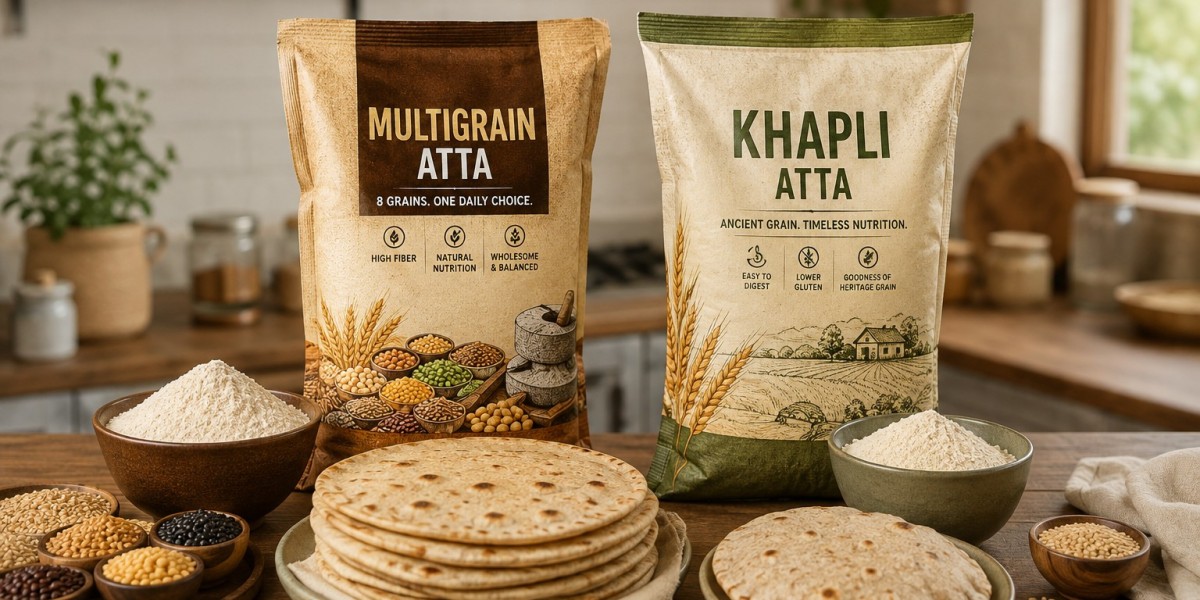
The households that are making the most consistent nutritional progress aren't those that found the one perfect flour — they're the ones that have figured out that two complementary flours, each serving a specific purpose, cover more nutritional ground than either alone. The specific combination that's emerging in health-conscious urban kitchens — a multigrain blend for daily staple use and an ancient grain variety for targeted nutritional goals — is one of the most practically intelligent approaches to everyday Indian nutrition currently available.
Why One Flour Rarely Covers Everything
The nutritional requirements of a typical Indian household span several dimensions simultaneously. The grandmother managing blood sugar needs a flour with a low glycaemic profile. The working professional managing weight needs fibre-dense, satiating rotis that hold hunger off through the afternoon. The child building bone density needs calcium-rich grain nutrition. The elderly grandfather with digestive sensitivity needs a flour that his gut processes comfortably.
A single flour — however well-formulated — makes trade-offs between these requirements. A high-protein multigrain blend optimised for broad nutritional coverage may not be the most optimal choice for a family member with very specific digestive sensitivity to modern wheat gluten. An ancient wheat variety optimised for low gluten and digestive compatibility may not deliver the same broad protein and fibre coverage as an eight-grain blend.
Maintaining two flours — used for different meal occasions or by different household members depending on specific needs — eliminates these trade-offs rather than managing them.
The Daily Staple Flour — Multigrain for Broad Coverage
The daily staple flour is the one used for most of the household's roti and paratha production across the week. This is where volume matters — a family of four consuming flour across three meals daily needs a primary flour in sufficient quantity to sustain consistent daily use without running out mid-week.
A multigrain atta 10 kg pack is the format that makes daily staple use practical for this profile. At this volume, the flour becomes the kitchen's default rather than a specialty product purchased in small quantities and used sparingly. The ten-kilogram format changes the household's relationship with the flour — from occasional healthy choice to standard daily ingredient — which is precisely the shift that produces consistent nutritional benefit rather than sporadic improvement.
The eight-grain blend that a quality multigrain atta provides covers the broad nutritional requirements of daily use well — protein from legume additions, multiple fibre types from grain varieties, mineral breadth from the diversity of grain sources. This breadth of coverage is what makes it the right choice for the daily staple role.
The Targeted Flour — Khapli for Specific Health Goals
The second flour in the two-flour kitchen serves a different purpose — targeted use for household members with specific health requirements, or for meal occasions where the particular nutritional profile of an ancient grain variety adds distinctive value.
Khapli atta — made from emmer wheat, one of the oldest cultivated wheat varieties — carries a different nutritional and digestive profile from modern commercial wheat. Its lower modern gluten content and natural grain structure produce a flour that digests more comfortably for people who find commercial wheat difficult, produces a lower glycaemic response that benefits blood sugar management, and retains the mineral density that modern wheat's selective breeding optimised away in favour of yield.
For households with elderly members managing diabetes or digestive sensitivity, or for meal occasions — weekend breakfasts, special rotis — where the slightly different texture and earthy flavour of an ancient grain adds a welcome variety to the week's cooking, khapli atta serves the targeted role that the daily multigrain blend doesn't need to fill.
The combination works because each flour does what the other doesn't prioritise — multigrain for broad daily nutritional coverage at volume, khapli for the specific digestive and glycaemic profile that benefits household members with particular requirements.
How the Two-Flour Kitchen Works in Practice
The practical implementation is straightforward. The multigrain blend handles the majority of the household's roti production — perhaps four or five evenings a week and most lunches. Khapli atta is used specifically for household members who benefit most from its digestive compatibility and glycaemic profile, or rotated in for certain meals where variety in texture and flavour is welcome.
The kitchen maintains both flours in regular rotation rather than treating one as the standard and the other as the health supplement. Over time, most households find that the rotation becomes habitual — the multigrain blend for standard weekday production, the ancient grain variety for weekend cooking or for specific household members' daily needs.
Why Sourcing Quality Matters for Both
The two-flour strategy only produces its intended nutritional outcomes if both flours are what they claim to be — processed in ways that preserve the grain characteristics that make them valuable rather than compromising them for cost or shelf-life reasons.
Multigrain blends that pad their grain variety list with minimal quantities of each ingredient, or that use refined rather than whole grain versions of the grains in the blend, don't deliver the nutritional profile that the label implies. Ancient wheat varieties like khapli that are over-milled lose the bran integrity that makes them different from standard commercial wheat.
For households building this two-flour kitchen strategy, 10on10 foods sources and processes both its multigrain atta and its khapli atta to the standard that makes the strategy nutritionally meaningful — whole grain integrity in both, genuine grain diversity in the multigrain blend, and traditional grain character in the khapli variety.
The Kitchen That Works Harder for Your Health
The two-flour kitchen isn't complicated. It's two products on the same shelf, used in the same cooking methods, producing better nutritional outcomes than either could alone. For households that have already thought carefully about what they want from their daily flour, this combination is the natural next step — not more effort, just more intelligence in how the effort is applied.










