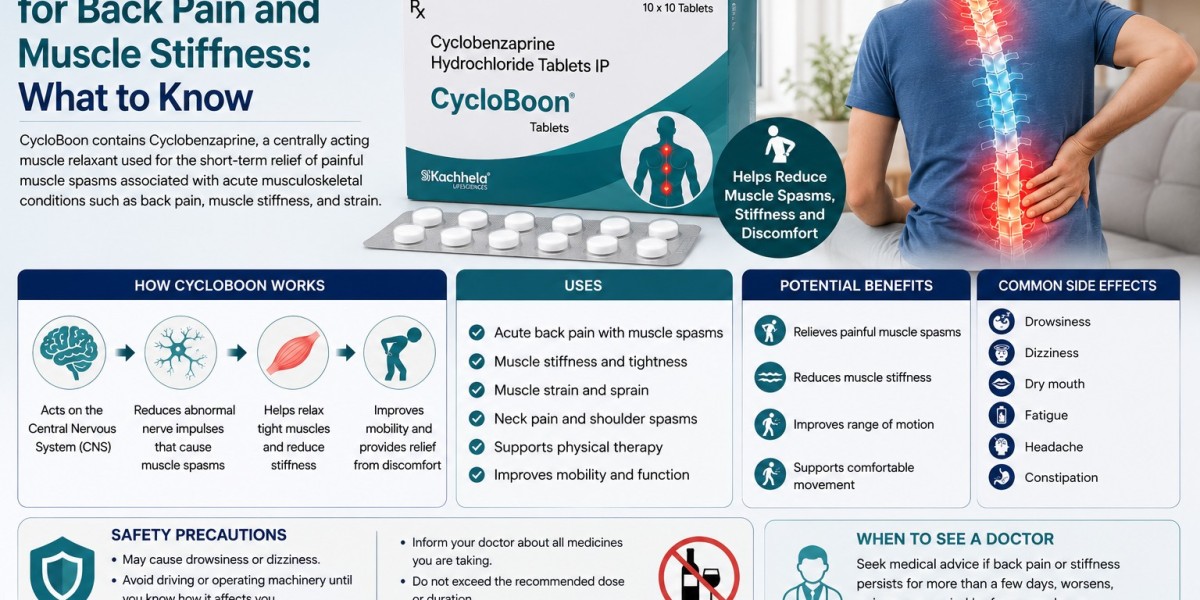

Back pain and muscle stiffness are common problems that can make everyday activities such as walking, bending, sitting, or sleeping uncomfortable. Muscle strain, physical overuse, sprains, and other acute musculoskeletal conditions can sometimes cause painful muscle spasms that make symptoms worse. CycloBoon, which contains cyclobenzaprine, is a centrally acting muscle relaxant that may be prescribed as part of a short-term treatment plan when muscle spasms contribute to acute musculoskeletal discomfort.
Understanding the role of CycloBoon for back pain and muscle stiffness can help patients learn how muscle relaxants fit into an overall pain-management and recovery plan.
What Is CycloBoon?
CycloBoon contains cyclobenzaprine, a centrally acting skeletal muscle relaxant. Cyclobenzaprine is generally used for short-term relief of muscle spasms associated with acute, painful musculoskeletal conditions.
Unlike some medicines that directly target pain signals, cyclobenzaprine primarily works through the central nervous system to reduce excessive muscle activity associated with spasms.
This means CycloBoon is not intended to treat every type of back pain. Its potential role is more specific when muscle spasm, tightness, or stiffness is contributing to the discomfort.
Can CycloBoon Help With Back Pain?
Back pain can have many different causes. Muscle strain and spasm are among the possible contributors, particularly after physical exertion, awkward movement, or certain acute injuries.
When muscle spasm is an important component of acute back pain, a healthcare professional may consider a muscle relaxant such as cyclobenzaprine.
CycloBoon for back pain should therefore be understood as a treatment option for appropriate cases rather than a general solution for all types of back pain.
Persistent or severe back pain may have causes that require a different treatment approach, so identifying the underlying problem is important.
How Does CycloBoon Work?
When a muscle is strained or irritated, it can contract involuntarily. This may result in a cycle such as:
Muscle strain → muscle spasm → stiffness → discomfort → restricted movement
Cyclobenzaprine acts mainly within the brain and spinal cord to reduce excessive somatic motor activity associated with muscle spasms.
By reducing abnormal muscle activity, CycloBoon may help decrease:
- Muscle spasms
- Muscle tightness
- Stiffness associated with spasms
- Discomfort related to acute muscle spasm
- Movement limitations caused by muscle tightness
Cyclobenzaprine does not directly repair an injured muscle or eliminate every underlying cause of back pain.
CycloBoon for Muscle Stiffness
Muscle stiffness can make the back feel tight and uncomfortable, particularly after physical activity or an acute strain. Some people may find that stiffness limits bending, turning, walking, or other normal movements.
When stiffness is related to muscle spasm, reducing excessive muscle activity may help improve comfort and mobility.
However, CycloBoon for muscle stiffness should be used according to professional medical advice. Ongoing stiffness can sometimes indicate an underlying condition that needs further evaluation.
When May CycloBoon Be Considered?
A healthcare professional may consider cyclobenzaprine when acute musculoskeletal problems involve painful muscle spasms.
Potential situations may include:
- Acute back muscle spasms
- Muscle strains
- Sprains
- Neck muscle spasms
- Musculoskeletal injuries
- Muscle tightness following physical overexertion
The appropriate treatment depends on the individual's symptoms, medical history, other medicines, and the underlying cause of the problem.
Potential Benefits of CycloBoon
When appropriately prescribed, CycloBoon may provide several supportive benefits.
Helps Reduce Muscle Spasms
Cyclobenzaprine is primarily intended to reduce excessive muscle activity associated with painful spasms.
May Ease Muscle Tightness
Reducing muscle spasms can potentially make the affected area feel less tight.
May Support Comfortable Movement
When muscle spasms become less intense, some patients may find everyday movement easier.
May Support Physical Therapy
Reducing muscle spasm may make it easier for some patients to participate in stretching or physical therapy recommended by a healthcare professional.
CycloBoon and Physical Therapy
Medication is often only one part of managing acute back pain related to muscle spasm.
A healthcare professional may recommend combining treatment with:
- Appropriate rest
- Gentle stretching
- Physical therapy
- Gradual return to normal activity
- Strengthening exercises when appropriate
- Posture and movement modifications
The purpose of this approach is to address both the symptoms and the factors contributing to restricted movement.
Common CycloBoon Side Effects
Like other medicines, cyclobenzaprine can cause side effects. Common CycloBoon side effects may include:
- Drowsiness
- Dizziness
- Dry mouth
- Fatigue
- Headache
- Constipation
Drowsiness and dizziness are especially important because they can affect concentration, coordination, and alertness.
Patients should understand how CycloBoon affects them before driving, operating machinery, or performing other activities that require full attention.
CycloBoon Safety Precautions
CycloBoon should be taken only according to the instructions provided by a healthcare professional.
Important precautions include:
- Do not take more than prescribed.
- Tell your healthcare professional about all medicines you use.
- Discuss existing medical conditions before starting treatment.
- Be cautious with activities requiring alertness.
- Follow the recommended duration of treatment.
- Do not change the formulation or dosing schedule without professional advice.
Cyclobenzaprine is generally intended for short-term use in acute musculoskeletal conditions.
Can CycloBoon Be Taken With Alcohol?
Alcohol can increase the sedative effects of medicines that affect the central nervous system. Combining alcohol with cyclobenzaprine may therefore increase drowsiness, dizziness, and impaired coordination.
Patients should discuss alcohol use with their healthcare professional and avoid combining alcohol with CycloBoon unless specifically advised otherwise.
CycloBoon and Other Medicines
Cyclobenzaprine can interact with certain medicines. This is particularly important for patients who take several prescription or over-the-counter products.
Tell your healthcare professional about:
- Prescription medicines
- Over-the-counter medicines
- Antidepressants
- Sleep medicines
- Other muscle relaxants
- Pain medicines
- Vitamins and supplements
Some combinations can increase sedation, while certain medicines that affect serotonin may increase the risk of a serious reaction.
Is CycloBoon Suitable for Everyone?
No. A muscle relaxant is not appropriate for everyone with back pain or stiffness.
Before recommending cyclobenzaprine, a healthcare professional may consider:
- The cause of the back pain
- Severity of muscle spasms
- Age
- Existing medical conditions
- Current medications
- Previous reactions to medicines
- Expected treatment duration
This evaluation helps determine whether cyclobenzaprine is an appropriate option.
When Should Back Pain Be Evaluated?
Not every episode of back pain is caused by muscle spasms. Medical evaluation is especially important when back pain is severe, persistent, repeatedly returning, or accompanied by other concerning symptoms.
Instead of continuing a muscle relaxant without reassessment, patients with ongoing symptoms should discuss them with a healthcare professional.
Finding the cause of persistent back pain can help determine the most appropriate treatment strategy.
Tips for Managing Muscle Stiffness During Recovery
Alongside any prescribed treatment, several supportive approaches may be useful depending on the cause of the stiffness:
Stay Appropriately Active
Extended inactivity may not always be helpful for acute musculoskeletal problems. A gradual return to normal movement may support recovery when medically appropriate.
Follow Physical Therapy Recommendations
Physical therapy can help improve flexibility, movement, strength, and function when recommended.
Avoid Activities That Worsen the Injury
During recovery, temporarily modifying activities that aggravate symptoms may help prevent additional strain.
Pay Attention to Posture and Movement
Poor movement patterns or prolonged positions can contribute to discomfort. Appropriate ergonomic and posture adjustments may be beneficial.
CycloBoon ER and Back Pain
Some CycloBoon products may be marketed in extended-release formulations. Extended-release medicines are formulated differently from immediate-release products, so patients should not assume that the two formulations can be substituted for one another.
If a product is labeled CycloBoon ER, follow the specific product instructions and prescription provided by the healthcare professional. Do not change the dose or method of administration without medical advice.
Final Thoughts
CycloBoon for back pain and muscle stiffness may have a role when acute musculoskeletal pain is accompanied by painful muscle spasms. Its active ingredient, cyclobenzaprine, works mainly through the central nervous system to reduce excessive muscle activity, potentially helping relieve spasms, tightness, and associated discomfort.
CycloBoon is not a treatment for every type of back pain. The underlying cause of the symptoms, the patient's medical history, and other medications all need to be considered before treatment.
When prescribed appropriately, a muscle relaxant may be used alongside supportive approaches such as physical therapy, appropriate activity, stretching, and gradual recovery. Because cyclobenzaprine can cause drowsiness, dizziness, and medication interactions, it should be used according to professional medical guidance.