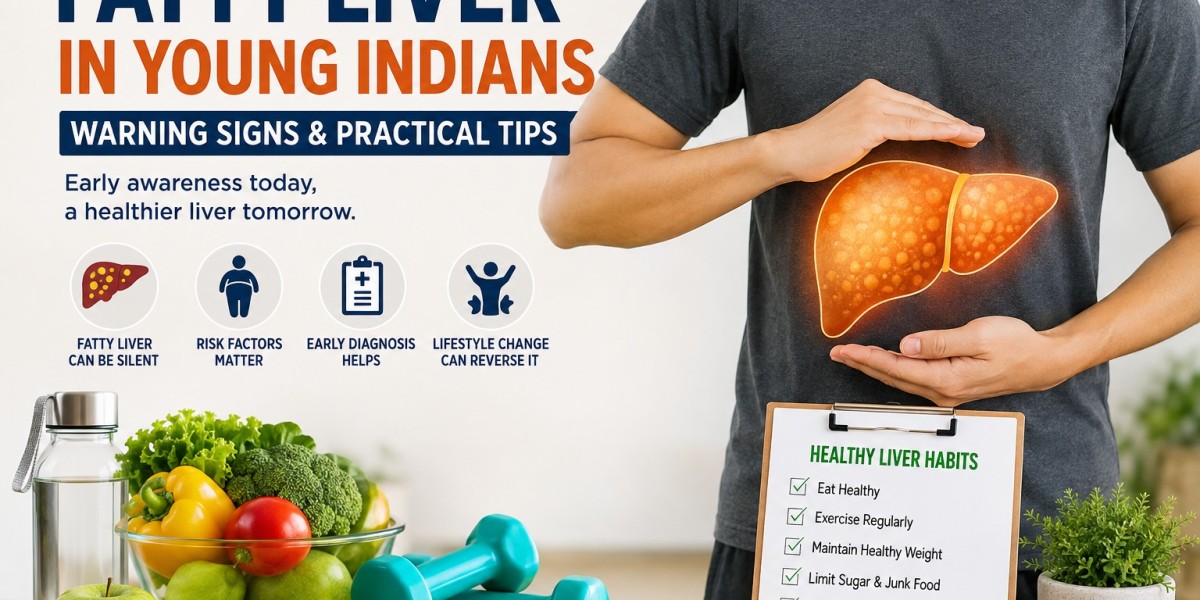

We now recognize that fatty liver may affect young adults and not just the elderly. In some cases INDIANS may even have fatty liver as an asymptomatic and seemingly healthy condition.
Metabolic dysfunction-associated fatty liver disease (MASLD) impacts about 27.4% of the Indian adult population between the ages of 18 and 30, further demonstrating why liver health is a concern at a younger age.
Learn fatty liver warning signs in young Indians, causes, tests, prevention and treatment, with guidance on choosing the best liver transplant surgeon in india.
There's a silver lining to this as fatty liver is reversible if diagnosed early. Your liver plays a pivotal role in the body's chemical processing. Too much fat can slow the body over a period of many years. However, the stress that is caused to the rest of the body from an already overworked liver can lead to organ damage in the long run.
1. What Is Fatty Liver?
When someone has fatty liver, it means the liver has a large build up of fat. A more recent medical term used for this condition, which includes a build up of fatty liver due to the metabolic risk factors of obesity, diabetes, high blood pressure, and unhealthy cholesterol, is **metabolic dysfunction-associated steatotic liver disease (MASLD)**.
Some people may have a small amount of fatty liver and suffer no ill effects. However, for some people, a build up of fatty liver stimulates the liver cell inflammation and injury. This condition is referred to as **metabolic dysfunction-associated steatohepatitis (MASH)**.
Persistent inflammation can progress to liver disease including:
* **Liver fibrosis**
* **Liver cirrhosis**
* **Liver failure**
* **Liver cancer**
This disease process does not occur with everyone. The most important part is that **early identification provides the opportunity to lower the risk of developing irreversible liver damage**.
## **2. Why Is Fatty Liver Increasing Among Young Indians?**
What is the reason for young adults in their twenties having a fatty liver?
Modern sedentary lifestyles are a part of the reason.
Eating unhealthy foods delivered to you, excessive sugar sweetened beverages, and a lack of physical activity and good sleep, slowly and negatively affect your metabolic health.
The results of an Indian study done on young adults ages 18-30 revealed the burden of MASLD and abnormal liver enzymes. Some of the participants had a normal body mass index (BMI), and were under the age of 30. This shows that there is **no guarantee of having a healthy liver**, even if you are young or have a normal BMI.
Other risk factors are:
**Bad dietary habits** are defined by the consumption of fatty, fried, refined carb foods, and sugary drinks on a regular basis which causes belly fat and issues with your metabolism.
**Lack of physical activity and insulin resistance** inhibits calorie burn and leads to insulin resistance and fat accumulation.
**Type 2 diabetes** along with fatty liver, causes a person to be at an even higher risk of liver disease.
**High blood fats and triglycerides** are also known to cause metabolic liver disease.
There are **genetic factors** that predispose a person to fatty liver disease.
Answered questions:
Use your answers as a guide to see which questions you answered correctly.
1. B
2. B
3. B
4. B
5. C
### 3. Can Young and Slim People Develop Fatty Liver?
Yes.
This is perhaps the most misunderstood point regarding fatty liver.
You can begin to accumulate fat in the liver without being overweight. One of the first studies of its kind from India reported fatty liver among non-obese individuals. Similarly, a recent study of young Indians has shown that MASLD may not be accurately diagnosed within the conventional BMI ranges.
For some individuals, **metabolic health may be more important than appearance.**
Therefore, an individual can have the following and should also be evaluated for fatty liver:
- High triglycerides
- Prediabetes or diabetes
- High blood pressure
- Unhealthy waist circumference
- Low levels of physical activity
- Family with metabolic disease
The individual should go and speak with their doctor about the above listed and potential fatty liver risk factors.
**Don't judge your liver health by how you look.**
### 4. Common Warning Signs of Fatty Liver
Fatty liver can be a difficult condition to diagnose because it is often asymptomatic.
Patients can have a **complete absence of symptoms** and be diagnosed weeks or months later during an ultrasound or a blood test that was ordered for an unrelated reason.
Some symptoms that can occur include:
- **Fatigue that does not go away**
- **Lack of energy**
- **Sensation of discomfort in the upper right of your abdomen**
- **Ill feeling**
- **Weakness**
None of the symptoms listed can be used to diagnose fatty liver as they can have multiple other causes. They are all very nonspecific.
More serious signs of advanced liver disease may include:
- Jaundice (yellowing) of the eyes or skin
- Abdominal swelling
- Leg swelling
- Easy bruising or bleeding
- Confusion or excessive sleep
- An extremely reduced appetite
- Unexpected weight loss
These signs require urgent medical care.
## 1. Risk Factors Young Indians Should Know
For certain individuals, the chance of developing fatty liver is greater than others.
### Key risk factors are:
**1. Obesity OR Overweight**
Fatty liver occurs with abdominal obesity.
**2. Diabetes type 2 OR prediabetes**
High blood sugar and insulin resistance promote fat accumulation in the liver.
**3. High blood triglyceride levels**
High blood triglyceride levels are a metabolic warning sign.
**4. High blood pressure**
Hypertension is often seen with the metabolic conditions that are associated with MASLD.
**5. Poor diet**
Consumption of heavily processed foods on a regular basis makes healthy weight and metabolic control more difficult.
**6. Physical inactivity**
Even when body weight is normal, your metabolic risk increases with inactivity.
**7. Family history**
Obesity, diabetes or liver disease in the family increases risk.
**8. Certain illnesses or medications**
Illness, condition or medication can lead to fat accumulation in the liver. Your doctor must examine the situation to decide if the cause is lifestyle related.
## 2. How is fatty liver diagnosed?
Your physician will likely perform a blood test after taking the medical history and performing a physical examination to decide if fatty liver is probable.
Some typical tests include:
### Liver blood tests
Damaged liver cells may show up in tests like ALT and AST, but normal liver enzymes do not always mean normal liver health.
### Ultrasound
An abdominal ultrasound can show changes of fatty liver. It is also used as a first-line imaging test.
### FibroScan or elastography
Transient elastography can give a measurement of the liver's stiffness. This is helpful in assessing fibrosis. Measurements related to this also can estimate the liver's fat.
### FIB-4 and other risk scores
Blood tests can be done to help a doctor determine the possibility of fibrosis. These scores are helpful for a doctor to assess a patient's risk of significant fibrosis.
### Further tests
Depending upon your results, your doctor may order other imaging tests, or refer you to a specialist, or in some cases may recommend a liver biopsy.
The more pertinent question is not "Do I have fatty liver?", but rather "Do I have inflammation and fibrosis?", and "What is my long-term risk?"
### 7. Does Fatty Liver Always Lead to Cirrhosis?
No.
Fatty Liver does not mean you will develop Cirrhosis.
Many cases of early stage MASLD can be improved with lifestyle management and the resolution/ control of other established metabolic risk factors.
Eventually, some individuals will progress to have severe inflammation and fibrosis, especially if fatty liver is present along with other obesity related diseases, such as diabetes or metabolic syndrome, etc.
For this reason, ignoring fatty liver is not a good strategy.
Think of fibrosis as **build-up of scars following multiple injuries**. Adding scars and tissue will continue to build up as long as the original injury is present and unaddressed. Early treatment of the original injury can prevent scarring from worsening.
## **8. Practical Diet Tips for a Healthier Liver**
Spending money on a 'liver detox' program or expensive supplements is not necessary to take care of your liver.
In fact, many detox programs and supplements have little to no evidence to support their claims, and some supplements can actually liver damage.
Instead, focus on making sustainable changes to your eating habits.
### More Of:
* **Vegetables**
* **Whole fruits**
* **Whole grains**
* **Legumes and pulses**
* **Seeds and nuts**
* **Fish and healthier sources of protein**
* **Fibre**
### Less Of:
* **Soft drinks**
* **Shakes**
* **Excess sweet treats**
* **Fried foods**
* **Highly processed foods**
* **High servings of refined carbs**
* **Foods with high saturated fats**
The Mediterranean Diet is recommended for MASLD. It is a vegetable-focused diet.
For Indian households, this does not mean a complete lifestyle overhaul. You can make simple changes like **adding extra veggies, increasing intake of dal, selecting whole grains more, limiting fried snacks, cutting serving sizes, and controlling sugary drink intake to water or unsweetened drink intake**.
## **9. Exercise and Weight Management**
Moderate to high levels of exercise are beneficial for improving your metabolic and liver health.
For many adults, a goal of about **150 minutes of moderate physical activity per week** is practical and based on your personal health and fitness. Both aerobic and resistance exercises are beneficial.
Examples include:
- Brisk walking
- Cycling
- Swimming
- Jogging
- Strength training
- Home exercises
- Walking on the job
For prolonged sitting at hours at a time (8 or 10 hours), one gym session is not enough to make up for the rest of the day. Break long hours of sitting as often as possible.
### How much weight should you lose?
If you are overweight or have obesity, there are many benefits to losing weight.
Current evidence shows that a **5% reduction of body weight can improve liver steatosis.** Loss of about **7-10% of weight in obese people can improve both steatosis and symptoms of NAFLD.** Rapid weight loss is not recommended.
### **Be aware of the dangers of alcohol**
Alcohol can cause further damage to your liver and can even confuse the assessment of your fatty liver. Your doctor can inform you on the necessity of full alcohol avoidance.
### **Do not neglect your metabolic health**
Monitor and control the following:
- Blood glucose
- Blood pressure
- Cholesterol
- Triglycerides
- Body weight
- Waist circumference
The health of your liver and the health of your metabolism are related.
### **11. When Should You See a Liver Specialist?**
The following individuals should get evaluated by a physician:
- Fatty liver was found on an ultrasound.
- There are multiple risk factors.
- There are persistent abnormal liver enzymes.
A specialist evaluation is a good idea if:
- Liver Disease is advanced.
You should not let things get really bad.
Your doctor will evaluate your risk based on metabolic issues and blood work, etc., including fibrosis and imaging.
If cirrhosis is suspected, you should see a specialist as well.
### **12. Can Fatty Liver Be Reversed?**
**Fatty liver is almost always reversible. The first steps are changing your lifestyle and addressing the status of your metabolic health.** The current AASLD recommendations present in the new guidelines of MASLD care still place weight management, physical activity and the management of associated disorders as important components of MASLD care.
Depending on the circumstance, medications for obesity and diabetes, for example, can be considered by the physician. Such treatments should only be initiated with a clear understanding of the diagnosis and of the fibrosis stage, and considering the pros and the cons of treatment.
It is unwise to initiate any treatment based only on what is said to be effective on online forums.
You've got to stay away from the 'I'll start next month' cycle. Your liver likes incremental progress, not perfection.
**13 Role of a Liver Transplant Specialist**
Younger patients with a fatty liver do **not** usually require a liver transplant.
Liver transplantation is relevant when the liver disease progresses to advanced, decompensated cirrhosis or liver cancer and other severe liver conditions.
Once patients require a transplant, selection of a transplant team is important. Someone looking up [‘the best liver transplant surgeon in India’] will need to look beyond advertisements and consider other important factors. They are:
- Experience in liver transplant
- Hospital infrastructure
- A multidisciplinary transplant team
- Complex liver disease management
- Transplant outcome with care
- Post-transplant care
However, a liver transplant should be seen as a palliative treatment for advanced liver disease not routine treatment for fatty liver.
The better strategy is prevention and early intervention whenever possible.
## **14. Conclusion**
Fatty liver can affect healthy and young Indians. Attention must be paid towards this condition because fatty liver symptoms are observed in overweight and unhealthy people. Metabolic health, blood sugar, abdominal fat, genetics, lifestyle, triglycerides and abdominal fat can also be impacted.
### **3. What are the first symptoms of fatty liver?**
Most people experience fatty liver with no symptoms. Some people experience general upper abdominal discomfort and some experience fatigue. Fatigue is not a good enough symptom to figure out fatty liver.
### **4. Can fatty liver be reversed naturally?**
Sustainable weight loss, regular exercise and dietary improvements and diabetic control can help calm and reverse early fatty liver. The treatment depends on the patient and the progression of the liver disease. citeturn0search0
### **5. Does fatty liver mean I will need a liver transplant?**
**No**. Only a small fraction of the fatty liver patients require liver transplantation. When severe consequences of fatty liver like cirrhosis and associated malignancies occur that is when transplant is considered.