
INTRODUCTION
IVF Laboratory Design can include much more than preparing a laboratory layout. Depending on the scope offered by the service provider, a complete project can cover turnkey planning, engineering, procurement, installation, testing, validation, commissioning, documentation, and handover. Since IVF laboratories require carefully controlled environmental conditions and specialized workflows, integrating these stages under one coordinated project can help reduce interface issues and improve consistency between the design and the installed facility.
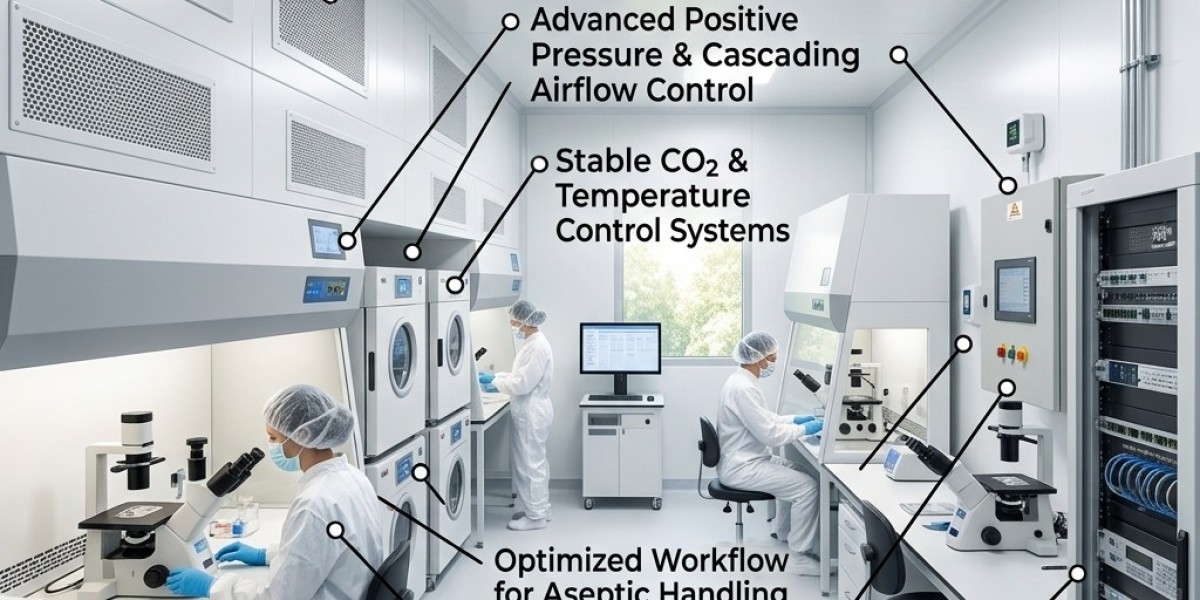
A professionally planned IVF laboratory considers embryology workflow, cleanroom principles, HVAC, air quality, temperature and humidity control, filtration, electrical systems, laboratory utilities, specialized equipment, contamination control, monitoring, and future expansion. Turnkey execution can therefore provide healthcare organizations with a more coordinated route from initial concept to operational laboratory.
What Is Turnkey IVF Laboratory Planning?
Turnkey planning means that a project provider takes responsibility for multiple stages of laboratory development rather than delivering only architectural drawings.
Depending on the project scope, turnkey services may include:
- Requirement assessment
- Site survey
- Laboratory planning
- Workflow design
- Cleanroom planning
- HVAC engineering
- Utility planning
- Electrical design
- Equipment coordination
- Material selection
- Procurement
- Installation
- Testing
- Commissioning
- Documentation
- Staff orientation
- Maintenance planning
The exact scope should always be clearly defined in the project agreement.
Why Turnkey Planning Is Important for IVF Laboratories
An IVF laboratory contains sensitive procedures involving gametes, embryos, culture systems, and specialized laboratory equipment. Environmental variations and poor workflow planning can create operational challenges.
Turnkey planning helps coordinate different systems from the beginning.
For example, HVAC requirements can be considered alongside:
- Laboratory zoning
- Equipment placement
- Air distribution
- Personnel movement
- Material movement
- Electrical loads
- Service access
- Maintenance requirements
This integrated approach can reduce conflicts during installation.
1. Initial Requirement Assessment
The first stage is understanding the healthcare facility's objectives.
The project team may assess:
- Type of IVF services
- Expected workload
- Available floor area
- Number of laboratory rooms
- Existing infrastructure
- Equipment requirements
- Future expansion plans
- Budget considerations
This information becomes the foundation for laboratory planning.
2. Site Survey and Feasibility Assessment
A site survey helps identify existing conditions that could affect the project.
The assessment may include:
- Room dimensions
- Ceiling height
- Existing HVAC
- Electrical capacity
- Plumbing
- Medical gases
- Structural limitations
- Access routes
- Service shafts
- Equipment movement pathways
Identifying these conditions early can reduce unexpected modifications during construction.
3. IVF Laboratory Zoning
Proper zoning is an important part of laboratory planning.
An IVF facility may contain areas such as:
- Embryology laboratory
- Andrology laboratory
- Media preparation area
- Cryopreservation area
- Sample handling areas
- Storage
- Change areas
- Equipment/service spaces
The exact zoning depends on the facility's clinical model and applicable requirements.
Good zoning can help separate activities and manage personnel and material movement.
4. Workflow Planning
Workflow is one of the most important considerations in an IVF laboratory.
The design should consider movement of:
- Patients
- Embryologists
- Laboratory personnel
- Samples
- Media
- Equipment
- Consumables
- Waste
The objective is to create an efficient sequence while reducing unnecessary movement and opportunities for contamination.
5. Cleanroom Engineering
IVF laboratory environments often require careful control of airborne contamination and environmental conditions.
Cleanroom engineering may address:
- Air cleanliness
- Airflow
- Pressure relationships
- Filtration
- Room finishes
- Personnel movement
- Material movement
- Cleaning procedures
A turnkey provider can coordinate these requirements with the architectural and MEP systems.
6. HVAC System Planning
HVAC is a critical component of IVF laboratory infrastructure.
The design may address:
- Temperature control
- Humidity control
- Air changes
- Fresh-air management
- Filtration
- Pressure relationships
- Air distribution
- Monitoring
The HVAC system should be designed according to the laboratory's specific requirements rather than relying on a generic air-conditioning system.
7. Air Quality Management
Air quality is particularly important in controlled laboratory environments.
The design can incorporate appropriate:
- Filtration
- Air distribution
- Ventilation
- Monitoring
- Pressure control
The selected strategy should be based on the laboratory's processes, equipment, materials, and environmental requirements.
8. Selection of Construction Materials
Materials should be suitable for a laboratory environment.
Potential considerations include:
- Smooth wall surfaces
- Hygienic finishes
- Sealed joints
- Cleanable ceilings
- Suitable flooring
- Chemical resistance
- Durability
Materials should also allow maintenance personnel to access services without unnecessarily disrupting laboratory operations.
9. Electrical System Planning
IVF laboratories rely on several types of specialized equipment.
Electrical planning may include:
- Dedicated equipment circuits
- Emergency power
- UPS connections
- Earthing
- Data points
- Control systems
- Lighting
- Alarm systems
Electrical loads should be calculated according to the actual equipment schedule.
10. Laboratory Equipment Coordination
A turnkey provider may coordinate laboratory equipment requirements with the overall design.
Equipment can include:
- Embryology workstations
- Incubators
- Micromanipulation systems
- Microscopes
- Cryopreservation systems
- Centrifuges
- Laboratory refrigerators
- Freezers
- Air-quality monitoring systems
Equipment dimensions, heat loads, electrical requirements, service clearances, and access should be considered before finalizing the layout.
11. Cryopreservation Area Planning
Cryopreservation requires specialized planning.
The design should consider:
- Cryogenic equipment
- Storage systems
- Ventilation requirements
- Safety provisions
- Monitoring
- Access control
- Emergency planning
Cryogenic systems should be integrated according to the equipment manufacturer's requirements and applicable safety provisions.
12. Plumbing and Utility Planning
Depending on the laboratory configuration, utilities may include:
- Water
- Drainage
- Compressed air
- Vacuum
- Other laboratory services
Utility points should be located to support equipment operation while maintaining safe and practical access.
13. Procurement and Material Coordination
Turnkey execution may include procurement of specified materials and systems.
A coordinated procurement process can help ensure that:
- Approved materials are supplied
- Equipment arrives according to schedule
- Components are compatible
- Installation teams have required materials
- Project delays are minimized
Procurement should follow approved technical specifications.
14. Installation
Once the design and procurement stages are complete, installation can begin.
Installation may involve:
- Modular panels
- Ceiling systems
- Flooring
- HVAC systems
- Ductwork
- Filtration
- Electrical systems
- Monitoring systems
- Laboratory utilities
- Doors and access systems
Coordination between different installation teams is essential.
15. HVAC Installation and Balancing
Installing an HVAC system is only one part of the process.
The system may require:
- Duct installation
- Air terminal installation
- Filter installation
- Control integration
- Air balancing
- Sensor installation
- Pressure adjustment
Balancing helps ensure that the system delivers the intended air volumes and environmental conditions.
16. Environmental Monitoring
A modern IVF laboratory may require monitoring of key environmental parameters.
Depending on project requirements, monitoring can include:
- Temperature
- Relative humidity
- Differential pressure
- Air quality
- Filter status
- Alarm conditions
Continuous monitoring can help laboratory personnel identify deviations and respond appropriately.
17. Testing After Installation
Testing is essential before an IVF laboratory becomes operational.
Testing may include:
- HVAC performance testing
- Airflow measurement
- Pressure verification
- Temperature testing
- Humidity verification
- Filter integrity testing
- Particle measurement
- Electrical testing
- Equipment functionality checks
The exact tests depend on the project's technical specifications.
18. Commissioning
Commissioning confirms that integrated systems operate according to the approved design and project requirements.
Commissioning may involve:
- Reviewing installed systems
- Checking equipment connections
- Testing HVAC controls
- Verifying environmental conditions
- Checking alarms
- Testing utilities
- Reviewing documentation
- Recording test results
Commissioning provides an important transition between construction and operational use.
19. Validation and Documentation
Testing and validation documentation is important for controlled laboratory environments.
Project documentation can include:
- Approved drawings
- As-built drawings
- Equipment manuals
- Test reports
- Calibration records
- HVAC reports
- Filter certificates
- Commissioning documents
- Maintenance instructions
Proper documentation helps facility teams operate and maintain the laboratory.
20. Staff Training and Handover
A turnkey project may also include orientation or training for facility personnel.
Training can cover:
- HVAC controls
- Environmental monitoring
- Alarm systems
- Maintenance procedures
- Equipment operation
- Emergency procedures
A structured handover ensures that the facility team understands the installed infrastructure.
21. Benefits of Turnkey IVF Laboratory Execution
A turnkey approach can provide several advantages.
Better Coordination
One project team can coordinate architectural, HVAC, electrical, utility, and laboratory requirements.
Reduced Interface Problems
Multiple independent contractors can sometimes create coordination challenges. A turnkey structure can establish clearer responsibility.
Consistent Design and Installation
When the same project team manages design and execution, the installed system can remain more closely aligned with the approved design.
Simplified Project Management
The healthcare facility has a central project partner for major stages of the development.
Better Schedule Control
Coordinated procurement and installation can help manage project milestones.
Integrated Testing
Different systems can be tested as interconnected components rather than isolated installations.
22. Is Every IVF Laboratory Design Project Turnkey?
Not necessarily.
Some providers specialize only in:
- Architectural design
- Cleanroom design
- HVAC design
- Consultancy
- Equipment supply
Others may offer complete turnkey execution.
Healthcare facilities should therefore ask exactly what is included in the proposal.
A quotation should clearly identify whether it covers:
- Design
- Engineering
- Materials
- Installation
- Equipment
- Testing
- Commissioning
- Validation
- Documentation
- Training
- Maintenance
23. How to Select a Turnkey IVF Laboratory Provider
Healthcare organizations should evaluate providers based on several factors.
Relevant Experience
Look for experience with IVF laboratories, fertility centers, embryology environments, and healthcare cleanrooms.
Engineering Capability
Assess expertise in HVAC, filtration, electrical systems, utilities, monitoring, and cleanroom engineering.
Project Management
A dedicated project management team can improve coordination.
Testing Capability
Ask what testing and commissioning procedures are included.
Documentation
Confirm what documents will be supplied at handover.
Maintenance Support
Evaluate post-installation technical support and preventive maintenance options.
Customization
The provider should be able to adapt the design to the facility's workflow and equipment requirements.
24. Importance of Future Expansion
An IVF laboratory may expand its services over time.
Future requirements may include:
- Additional incubators
- Increased cryostorage
- Additional laboratory workstations
- New technologies
- Larger sample volumes
- Additional monitoring systems
Designing with expansion in mind can make future modifications easier.
25. Importance of Maintenance Planning
Turnkey planning should consider maintenance from the beginning.
Maintenance requirements may include:
- HVAC servicing
- Filter replacement
- Airflow verification
- Environmental sensor calibration
- Electrical inspection
- Equipment servicing
- Alarm testing
Accessible service points can reduce disruption during maintenance.
26. Lifecycle Benefits of Turnkey Planning
A well-coordinated project can provide benefits beyond initial construction.
These may include:
- Improved system reliability
- Easier maintenance
- Better documentation
- Reduced coordination issues
- Greater operational consistency
- Easier future upgrades
The ultimate value of turnkey planning depends on engineering quality, installation practices, commissioning, and ongoing facility management.
Conclusion
Yes, IVF Laboratory Design can include turnkey planning, installation, testing, and commissioning when the selected provider offers comprehensive project execution services. A complete approach can cover site assessment, workflow planning, laboratory zoning, cleanroom engineering, HVAC, air-quality management, electrical infrastructure, utilities, equipment coordination, installation, testing, commissioning, documentation, and handover. However, healthcare facilities should not assume that every design provider offers turnkey execution. The project scope should clearly define responsibilities, technical specifications, testing procedures, documentation, and post-installation support before work begins. Choosing an experienced partner with integrated engineering and project-management capabilities can help create a reliable, efficient, and future-ready IVF laboratory. For end-to-end IVF laboratory planning, engineering, installation, testing, and commissioning, Altus Airflow provides specialized solutions designed around the operational and environmental requirements of modern fertility laboratories.
Frequently Asked Questions
1. Does IVF Laboratory Design include turnkey planning?
Yes, IVF Laboratory Design can include turnkey planning when the provider offers end-to-end project execution. This may cover site assessment, zoning, workflow, HVAC, utilities, equipment coordination, installation, testing, commissioning, and documentation.
2. Does IVF Laboratory Design include installation services?
Depending on the provider's scope, IVF Laboratory Design can include installation of modular systems, HVAC, filtration, electrical infrastructure, utilities, monitoring systems, and other specified laboratory components.
3. What testing is included in IVF Laboratory Design projects?
Testing associated with IVF Laboratory Design may include airflow measurement, pressure testing, temperature and humidity verification, filter integrity testing, particle measurement, electrical checks, and equipment functionality testing.
4. Does IVF Laboratory Design include commissioning?
Yes. Comprehensive IVF Laboratory Design projects may include commissioning to verify that HVAC, environmental controls, utilities, monitoring systems, and other integrated components operate according to approved project requirements.
5. Is validation part of turnkey IVF laboratory projects?
Validation can be included depending on the contractual scope. A comprehensive IVF Laboratory Design project may provide testing records, environmental verification, commissioning documentation, and other required project documentation.
Read Our Previous Blog------>What are the benefits of choosing professional Modular Ophthalmic OT Manufacturers?