
"One of the most frequently asked questions by purchasing personnel is: 'Why do some sell for 30,000 yuan while others for 300,000 yuan, when both are claimed to be modular electric grippers in China?'" This reflects the wide range of differences in materials, technology, certifications, and services. Understanding the cost composition is necessary to make a purchasing decision that is neither costly nor wasteful.
1. Hardware Cost Differences
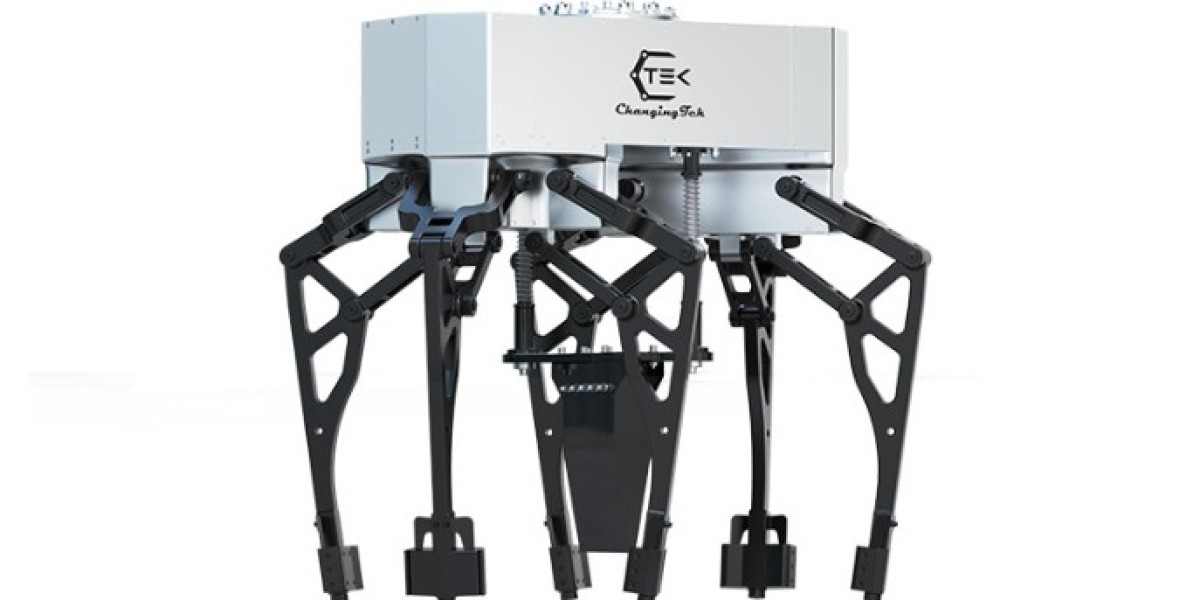
The hardware cost of an electric gripper mainly comes from four aspects. The motor is the core component, and imported brands generally use brushless DC servo motors, which cost 5-10 times more than ordinary stepper motors. In terms of sensors, high-precision torque sensors can account for more than 20% of the total cost of the entire machine. In the transmission mechanism, the precision grades of precision ball screws and linear guides directly affect the price. The difference between C5 and C3 grades can reach one fold. The material cost cannot be ignored either; the purchase price of cleanroom-grade aluminum alloy and special engineering plastics is much higher than that of ordinary materials.
2. Cleanroom Certification Cost
Semiconductor-grade products must pass a series of strict certifications, and this cost is often overlooked by purchasing personnel. The ISO 14644 cleanliness test needs to be conducted in a professional laboratory, and each test costs several tens of thousands of yuan. ESD certification, material out-gassing rate testing, halogen content testing, etc., all require reports issued by third-party institutions. These certification costs are allocated to each product, but they are necessary conditions for the product to be used in semiconductor production lines.
3. Software and Control Algorithm Cost
A large part of the price of high-end grippers is reflected in the software. The development of force control algorithms requires a large amount of data accumulation and repeated optimization in semiconductor handling scenarios, and this R&D investment is huge. The motion control algorithm determines the speed, accuracy, and stability of the gripper, and an excellent algorithm can make the same hardware perform better. The software development costs of the controller's human-machine interface, parameter management system, and data recording function will also be reflected in the final price.
4. R&D and Small Batch Production Costs
Modular electric grippers in China are typical small-batch customized products, with annual production volumes far lower than those of consumer electronics. Mold costs and specialized tooling costs are considerable and are allocated to each product. The labor cost of the R&D team is another major expense. The salary level of semiconductor equipment R&D engineers is relatively high, and the development cycle of a new product is usually 12-18 months. In addition, the semiconductor industry has a fast product iteration speed, and the R&D investment needs to be recovered within a limited sales cycle.
5. After-sales Service and Spare Parts System
Products with higher prices usually come with a more comprehensive after-sales service system. This includes the establishment of on-site technical support teams, the pre-deployment of spare parts warehouses, and the development and maintenance of remote diagnosis systems. For semiconductor production lines, the loss of one hour of equipment downtime can be much higher than the price of a gripper. Quick and reliable after-sales service itself is a value. When choosing a product, it is necessary to comprehensively evaluate the full life cycle cost and not just focus on the initial purchase price.
modular electric gripper China https://www.changingtek-robotics.com/modular-two-finger-gripper.html