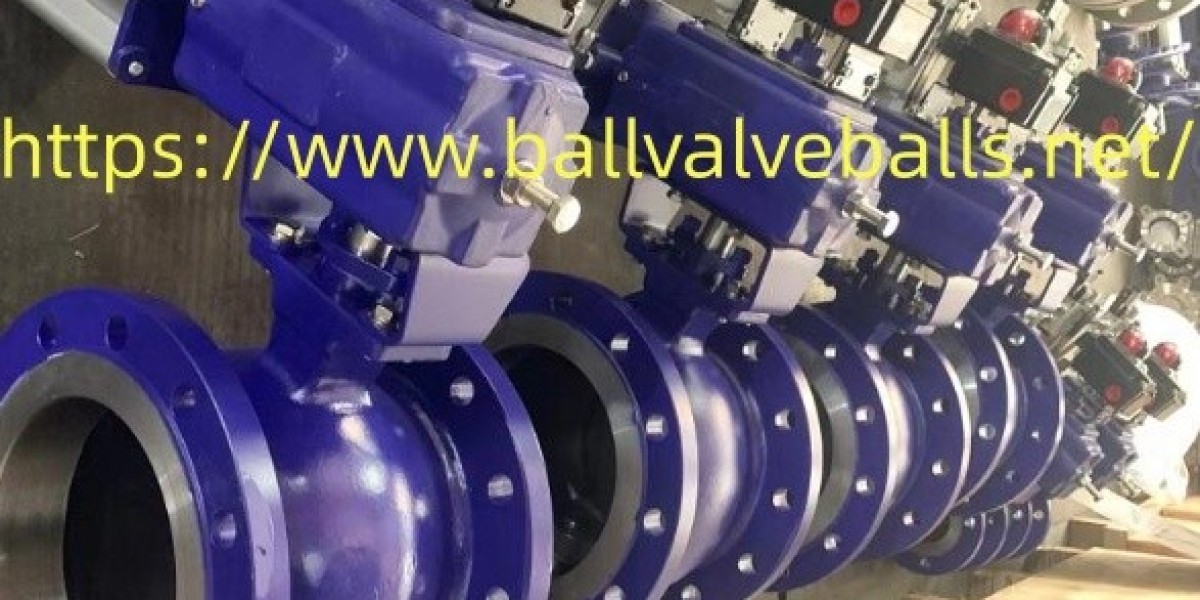

Hard Seal Ball components are used in industrial valve assemblies where metal sealing surfaces are selected for demanding service conditions. Unlike designs that rely primarily on soft polymer seats, a hard sealing arrangement uses carefully machined metallic surfaces and may incorporate wear resistant coatings. Metal seated valve designs are commonly considered for applications involving elevated temperatures, abrasive particles, or other conditions that can challenge softer sealing materials.
The Basic Working Principle
A ball valve controls flow through a spherical closure element with a passage through its center. During operation, the sphere rotates around its stem axis. When the passage aligns with the pipeline, fluid can move through the valve. When the passage turns away from the flow direction, the valve closes.
In a metal seated arrangement, sealing takes place through controlled contact between the spherical surface and the corresponding seat. The quality of this contact depends on dimensional accuracy, surface condition, contact force, and the design of the complete valve assembly.
The operating sequence is therefore relatively straightforward, but achieving dependable sealing requires careful engineering and manufacturing control.
Why Metal Contact Is Used
Soft sealing materials can be useful in many ordinary valve applications, but temperature, abrasion, or certain process media can create additional challenges. Metallic sealing surfaces provide another design approach when the application places greater demands on the sealing area.
For example, metal seated valves are used in services involving high temperature, solid particles, abrasive media, and other difficult process conditions. Their suitability depends on the actual process parameters rather than simply the valve category.
This makes application analysis an important part of component selection. Engineers need to consider the medium, pressure, temperature, cycling frequency, and expected operating environment before deciding which sealing arrangement is appropriate.
The Role Of Surface Treatment
Metal surfaces do not automatically provide the required sealing behavior simply because they are made from metal. Surface preparation and treatment can have a significant influence on the contact area and resistance to wear.
Industrial valve components may use hard facing or coatings based on materials such as tungsten carbide, chromium carbide, Stellite, or nickel based alloys. The appropriate treatment depends on the operating environment and the materials used for the mating surfaces.
Machining accuracy is also important. The spherical surface and seat must interact within the intended dimensional tolerances. Poor contact geometry can affect operating torque, sealing behavior, and component wear.
Where These Components Can Be Applied
Metal seated valve designs are associated with industries where process conditions can be challenging. Examples include power generation, petrochemical processing, oil and gas, chemical processing, mining, and other industrial systems handling demanding media.
The actual suitability depends on the complete valve design. A component should not be selected solely because a particular industry uses similar equipment. Engineers should evaluate the process medium and operating conditions of the specific installation.
For abrasive materials, for instance, surface wear can become an important consideration. For elevated temperatures, thermal expansion and material compatibility may receive greater attention.
Material Selection Requires Careful Planning
Different applications call for different materials. Stainless steels, alloy steels, nickel based alloys, and other engineering materials can be considered depending on corrosion conditions, temperature, pressure, and mechanical requirements.
Some industrial valve suppliers also use surface treatments to modify the properties of sealing areas. This approach allows the underlying component material and surface characteristics to be considered separately during engineering.
Buyers should provide detailed application information when requesting components. Useful information can include valve design, nominal size, pressure class, process temperature, medium characteristics, operating frequency, and required standards.
Precision Supports Assembly Compatibility
A valve component does not work independently. It forms part of an assembly containing the body, stem, seats, actuator, and other sealing elements.
Dimensional compatibility therefore matters during sourcing. The spherical diameter, bore geometry, seat dimensions, stem connection, and other interfaces need to correspond with the intended valve structure.
Ballvalveballs can work with buyers who need valve ball solutions for industrial projects, allowing discussions to focus on material requirements, machining considerations, surface treatment, and intended valve applications.
Maintenance Considerations
Even components designed for demanding applications require appropriate inspection and maintenance. Operating conditions can influence wear over time, particularly when the process contains abrasive particles or when the valve experiences frequent cycling.
Maintenance teams can monitor operating torque, leakage behavior, actuator performance, and other signs of changing valve conditions. Inspection intervals should follow the equipment manufacturers recommendations and the requirements of the specific process.
Keeping suitable records can also help purchasing teams identify replacement requirements before an unplanned maintenance situation develops.
What Buyers Should Consider
When sourcing valve balls for industrial use, buyers can begin with the application rather than the component alone. A clear understanding of the process makes it easier to discuss suitable materials and surface treatments.
Important questions can include:
What medium will pass through the valve?
What pressure and temperature conditions will occur?
Will the process contain abrasive particles?
How frequently will the valve operate?
Which valve standard and dimensional requirements apply?
What surface treatment is appropriate for the intended service?
Answering these questions gives suppliers useful information for evaluating the component requirements.
A Practical Approach To Industrial Valve Sourcing
Hard sealing components have a specific role in industrial valve engineering. Their value comes from the interaction between material selection, surface treatment, machining accuracy, sealing geometry, and the conditions of the process where the valve will operate.
For buyers seeking valve ball solutions for industrial applications, Ballvalveballs provides a product focused sourcing option that can be connected with specific project requirements. Product information and application discussions are available through https://www.ballvalveballs.net/ so buyers can review suitable options according to their valve design and operating conditions.