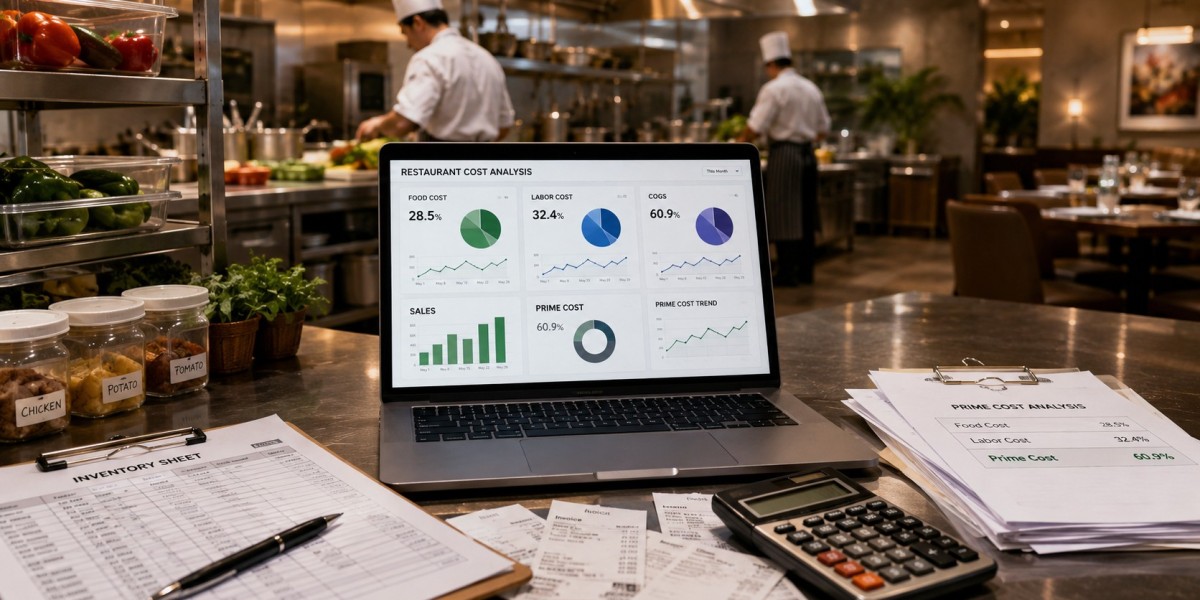

Understanding your restaurant's costs is essential for building a profitable and sustainable business. Among the many financial metrics restaurant owners track, prime cost restaurant is one of the most important concepts to understand. Prime cost shows how much a restaurant spends on its two largest controllable operating expenses: food and beverage costs and labor.
Restaurant owners can use prime cost to understand whether their operation is financially healthy, identify unnecessary expenses, and make better decisions about menu pricing, staffing, purchasing, and overall operations.
If you are learning restaurant financial terminology, the Restaurant Site Finder Prime Cost Glossary provides a useful resource for understanding this important restaurant metric.
What Is Prime Cost in a Restaurant?
prime cost restaurant is the combined cost of a restaurant's cost of goods sold (COGS) and labor costs.
In simple terms:
Prime Cost = Cost of Goods Sold + Labor Costs
COGS generally includes the ingredients and beverages used to produce the items you sell. Labor costs include wages, salaries, payroll taxes, benefits, and other directly related employee expenses, depending on how your restaurant defines and tracks labor.
Because food and labor are typically among the largest expenses a restaurant can control, monitoring prime cost can give owners a clear picture of operational efficiency.
For example, if a restaurant generates $100,000 in sales during a month and spends $30,000 on food and beverage costs and $30,000 on labor, its prime cost is:
$30,000 + $30,000 = $60,000
The restaurant's prime cost percentage would therefore be:
$60,000 ÷ $100,000 × 100 = 60%
The exact target will vary depending on the restaurant concept, location, menu, service model, and business structure.
Why Is Prime Cost Important for Restaurants?
Prime cost is important because it combines two major expenses into one useful measurement.
Looking at food costs alone does not tell you whether your restaurant is efficiently staffed. Similarly, analyzing labor without considering food and beverage costs gives you only part of the financial picture.
Prime cost helps restaurant owners evaluate:
Operational efficiency
Food and beverage spending
Labor management
Menu profitability
Pricing decisions
Staffing levels
Purchasing practices
Waste management
Overall cost control
A restaurant can have strong sales but still struggle financially if food waste, purchasing costs, overtime, or excessive staffing push prime costs too high.
How to Calculate Restaurant Prime Cost
Calculating prime cost is relatively simple.
Step 1: Determine Your COGS
Start by calculating the cost of the inventory used during the measurement period.
A common formula is:
Beginning Inventory + Purchases − Ending Inventory = COGS
For example:
Beginning inventory: $15,000
Purchases: $25,000
Ending inventory: $10,000
COGS would be:
$15,000 + $25,000 − $10,000 = $30,000
Step 2: Calculate Labor Costs
Next, calculate your total labor expenses for the same period.
Depending on your accounting system, this may include:
Employee wages
Salaries
Overtime
Payroll taxes
Employee benefits
Direct labor-related expenses
Suppose your total labor cost is $28,000.
Step 3: Add COGS and Labor
Now combine both figures:
$30,000 + $28,000 = $58,000
Your prime cost is therefore $58,000.
Step 4: Calculate Prime Cost Percentage
To determine the percentage:
Prime Cost Percentage = Prime Cost ÷ Sales × 100
If your restaurant generated $100,000 in sales:
$58,000 ÷ $100,000 × 100 = 58%
This percentage allows you to compare your restaurant's cost performance across different periods.
What Is a Good Prime Cost Percentage?
There is no single prime cost percentage that is ideal for every restaurant.
Different concepts have different operating structures. A full-service restaurant, fast-casual restaurant, café, bar, and fine-dining establishment may have significantly different food and labor requirements.
Many restaurant operators use a target range as a management benchmark, but the appropriate number should be determined based on your business model and financial goals.
Instead of focusing only on whether your percentage matches an industry benchmark, look for changes within your own business.
For example, if your prime cost was consistently 58% but suddenly increased to 66%, that change deserves investigation.
Possible causes could include:
Increased food prices
Higher labor costs
Excessive overtime
Food waste
Poor portion control
Theft or inventory loss
Scheduling inefficiencies
Lower menu prices
Declining sales
Prime Cost vs. Food Cost
Prime cost and food cost are related, but they are not the same thing.
Food cost generally measures how much your restaurant spends on food ingredients relative to food sales or total sales.
Prime cost combines food and beverage COGS with labor.
For example, a restaurant might have an excellent food-cost percentage but still experience financial pressure because of excessive labor expenses.
Prime cost provides a broader view because it evaluates both major controllable cost categories together.
Prime Cost vs. Operating Expenses
Prime cost is also different from total operating expenses.
Operating expenses can include costs such as:
Rent
Utilities
Insurance
Marketing
Repairs
Technology
Administrative expenses
Professional services
These expenses are important, but they are generally not included in prime cost.
This distinction makes prime cost particularly useful for evaluating the day-to-day operating efficiency of a restaurant.
What Can Cause Prime Cost to Increase?
Several factors can cause prime cost to rise.
Rising Ingredient Prices
Higher prices for meat, seafood, produce, dairy, beverages, and other ingredients can increase COGS.
Food Waste
Spoilage, overproduction, incorrect orders, and poor storage practices can increase food costs.
Excessive Labor
Overstaffing, unnecessary overtime, inefficient scheduling, and low productivity can increase labor expenses.
Poor Portion Control
Serving larger portions than planned can increase the amount of ingredients used per menu item.
Incorrect Menu Pricing
If menu prices do not properly reflect ingredient and labor costs, sales may not generate enough contribution toward profitability.
Declining Sales
Even if costs remain stable, lower sales can increase prime cost as a percentage of revenue.
How to Reduce Restaurant Prime Cost
Reducing prime cost does not necessarily mean cutting expenses blindly. The goal is to improve efficiency while maintaining food quality and customer service.
Improve Inventory Management
Track inventory regularly and monitor purchasing patterns.
Use inventory counts to identify:
Overstocking
Spoilage
Missing inventory
Slow-moving products
Purchasing errors
Better inventory control can reduce unnecessary food costs.
Standardize Recipes
Recipe cards help ensure that every employee uses consistent ingredients and portions.
Standardized recipes make it easier to calculate menu costs and identify changes in food usage.
Improve Portion Control
Consistent portion sizes can help control ingredient usage while maintaining customer expectations.
Use appropriate measuring tools and establish clear preparation procedures.
Optimize Staff Scheduling
Schedule employees based on expected demand rather than using the same staffing level every day.
Review historical sales patterns, reservations, events, and peak periods when creating schedules.
Avoid unnecessary overtime whenever possible.
Review Menu Pricing
Menu prices should reflect ingredient costs, labor requirements, overhead, market positioning, and customer expectations.
Regularly review menu item profitability rather than assuming that popular items are automatically the most profitable.
Monitor Waste
Track what is being discarded and why.
A waste log can help identify recurring problems such as overproduction, spoilage, preparation mistakes, or excessive portions.
Track Prime Cost Regularly
One of the most effective ways to manage prime cost is to monitor it consistently.
Depending on your restaurant's size and operation, you may review prime cost weekly, biweekly, or monthly.
Frequent monitoring allows you to identify problems before they become major financial issues.
For example, if food costs suddenly increase during one week, you can investigate purchasing prices, inventory levels, portion sizes, and waste immediately rather than waiting until the end of the quarter.
Use Prime Cost to Support Menu Decisions
Prime cost can also help guide menu engineering and pricing.
Suppose one menu item has a high ingredient cost and requires significant preparation time, while another has a lower ingredient cost and can be produced quickly.
Even if both items sell at similar prices, their contribution to the business may be very different.
Restaurant owners can evaluate:
Ingredient costs
Selling price
Preparation time
Labor requirements
Sales volume
Customer demand
This information can help determine which menu items deserve greater promotion and which may need recipe, portion, or pricing adjustments.
The Role of Location in Restaurant Profitability
Prime cost management begins after the restaurant starts operating, but some financial pressures can be influenced before opening.
Restaurant location affects customer access, competition, demographics, occupancy costs, staffing availability, and potential sales volume.
Restaurant Site Finder helps restaurant entrepreneurs evaluate potential locations using information related to demographics, competition, market opportunities, and other site-selection factors.
Choosing a location that aligns with your concept and target market can help create a stronger foundation for managing restaurant costs.
For example, a premium restaurant may need a market with customers who are comfortable with higher menu prices. A quick-service restaurant may prioritize high visibility, accessibility, and convenient customer traffic.
Understanding the market before committing to a location can support better financial planning.
Prime Cost and Restaurant Profitability
prime cost restaurant is not the same as profit.
A restaurant can have a well-managed prime cost and still face financial challenges because of high rent, debt payments, utilities, insurance, marketing expenses, or other costs.
However, controlling prime cost can give restaurant owners greater control over two major operating expenses.
The key is to balance cost management with:
Food quality
Customer satisfaction
Employee performance
Menu value
Service standards
Sales growth
Cutting labor too aggressively, for example, could reduce costs temporarily but create slower service and poor customer experiences. Similarly, using lower-quality ingredients may reduce food costs but damage your restaurant's reputation.
The goal should be sustainable efficiency.
A Simple Prime Cost Example
Consider a restaurant with the following monthly figures:
| Category | Amount |
|---|---|
| Monthly Sales | $120,000 |
| Food & Beverage COGS | $32,000 |
| Labor Costs | $34,000 |
| Prime Cost | $66,000 |
| Prime Cost Percentage | 55% |
The calculation is:
$32,000 + $34,000 = $66,000
Then:
$66,000 ÷ $120,000 × 100 = 55%
The restaurant can then compare this percentage with its historical performance and internal financial targets.
If the percentage rises unexpectedly, management can investigate the cause and make appropriate adjustments.
Common Prime Cost Management Mistakes
Restaurant owners sometimes make mistakes when calculating or interpreting prime cost.
Tracking It Too Infrequently
Waiting too long to review costs can allow problems to grow.
Using Inconsistent Accounting Periods
COGS and labor figures should correspond to the same measurement period as sales.
Ignoring Inventory Changes
Simply adding purchases to sales without accounting for beginning and ending inventory can distort COGS.
Focusing Only on Percentages
Percentages are useful, but actual dollar amounts and business trends also matter.
Cutting Costs Without Considering Quality
Cost reduction should not compromise food quality, employee performance, or customer experience.
Frequently Asked Questions
What is prime cost in a restaurant?
Prime cost is the combined cost of goods sold and labor expenses. It is one of the most useful metrics for evaluating a restaurant's controllable operating costs.
How do you calculate restaurant prime cost?
The basic formula is COGS + labor costs = prime cost. To calculate the percentage, divide prime cost by total sales and multiply by 100.
Why is prime cost important?
Prime cost helps restaurant owners understand how efficiently they are managing food, beverage, and labor expenses. Monitoring it can reveal cost increases and operational inefficiencies.
What causes restaurant prime cost to increase?
Common causes include rising ingredient prices, food waste, poor portion control, excessive overtime, overstaffing, inefficient scheduling, and declining sales.
Conclusion
Understanding prime cost restaurant metrics is essential for managing a financially healthy food-service business. By combining COGS and labor costs, prime cost gives restaurant owners a practical view of two of their most important controllable expenses.
The process starts with accurate inventory and labor tracking. From there, restaurant owners can calculate prime cost, monitor changes, identify inefficiencies, and make informed decisions about purchasing, staffing, menu pricing, waste, and operations.
There is no universal prime cost percentage that works for every restaurant. The right target depends on the concept, market, menu, service model, and overall financial structure. What matters most is understanding your own numbers and monitoring meaningful changes over time.
For more restaurant terminology and business resources, explore the Restaurant Site Finder Prime Cost glossary. By combining financial management with thoughtful location research and operational planning, restaurant owners can create a stronger foundation for long-term growth and profitability.