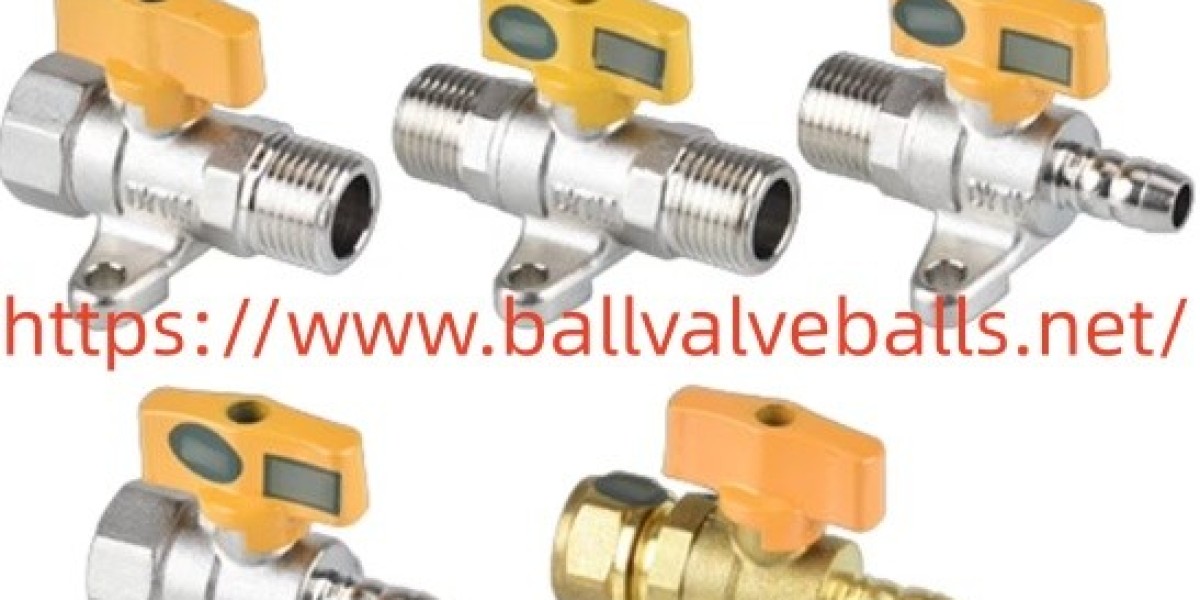

Ball Valve Fixed Ball is a spherical closure component designed to remain supported in a defined position inside a valve body while rotating around its central axis. Unlike a freely floating design, the sphere is supported by a stem and additional structural elements that help manage movement under operating conditions. This arrangement is commonly considered for industrial systems where pressure, flow conditions, operating cycles, and internal force need to be carefully managed.
Understanding The Fixed Structure
A fixed construction means the spherical element is not allowed to move freely in the same way as a floating arrangement. Instead, the stem and supporting components maintain its position while rotational movement is still possible.
When the internal passage aligns with the pipeline, fluid can travel through the opening. Rotating the sphere moves the passage away from the flow path, allowing the valve to restrict or stop movement through the line.
The basic principle is simple, but the supporting structure has an important role in maintaining controlled movement during operation.
Managing Internal Pressure
Pressure inside a pipeline can create forces against the spherical closure element. In a floating arrangement, these forces can contribute to movement toward the downstream seat.
A fixed design uses supporting elements to manage these forces through the valve structure. This can help distribute mechanical loads and maintain a defined relationship between the sphere and its seating surfaces.
The actual behavior depends on the complete engineering design, including pressure conditions, materials, dimensions, seat construction, and operating temperature.
How Rotation Controls Flow
The operating stem connects the external mechanism with the internal sphere. When an operator turns the stem, the sphere rotates with it.
A quarter turn can move the passage from an open position to a closed position. Intermediate positions may also be used in some applications, although suitability for throttling depends on the specific valve design.
Controlled rotation requires appropriate dimensional relationships between the stem, sphere, seat, and supporting components. Accurate machining can therefore influence how smoothly the assembly operates.
The Role Of Supporting Components
A fixed arrangement depends on more than the spherical element itself. Stem connections, trunnions, bearings, seats, seals, and body components all contribute to the complete operating structure.
The supporting parts need to work together without creating unnecessary resistance. Alignment is particularly important because uneven loading can affect contact between the spherical surface and its seats.
For manufacturers, matching these components during design and assembly can help create a valve structure suited to the intended service conditions.
Material Selection Matters
Material selection should correspond with the medium passing through the pipeline and the surrounding operating environment. Industrial systems may handle water, gases, oils, chemicals, slurries, or other process media.
Different applications can require different combinations of stainless steel, carbon steel, alloy materials, or specially treated surfaces. Corrosion, temperature, pressure, particle content, and operating frequency should all be considered.
Ballvalveballs provides spherical component options that can be evaluated according to material requirements, dimensions, surface treatment, and valve assembly conditions.
Surface Finishing And Contact
The contact between the sphere and seat is an important part of the sealing process. The surfaces need to be manufactured and finished according to the requirements of the complete assembly.
Surface roughness, roundness, dimensional tolerance, and treatment can influence contact behavior. Depending on the application, additional surface engineering may also be considered for wear or corrosion conditions.
A visual inspection alone cannot confirm all these characteristics. Appropriate dimensional and surface checks are useful during manufacturing and quality control.
Industrial Applications
Fixed spherical arrangements can be considered for various industrial pipeline systems where pressure management and controlled flow are important. Potential applications include chemical processing, energy facilities, petroleum handling, water systems, mining operations, and general process equipment.
Each application has different requirements. A component suitable for one service may not be appropriate for another because temperature, pressure, medium composition, and operating frequency can vary considerably.
Buyers should therefore provide relevant operating information before confirming component specifications.
Maintenance Considerations
Maintenance teams can benefit from clearly documented component information. Product dimensions, material references, surface treatment details, assembly drawings, and inspection records can help when replacement or servicing becomes necessary.
The supporting structure should also be considered during maintenance. Wear may occur at seats, bearings, seals, or stem interfaces depending on operating conditions.
Regular inspection procedures should follow the requirements of the complete valve system and the environment in which it operates.
Selecting A Suitable Component
When purchasing a fixed spherical component, buyers should look beyond diameter alone. Important considerations can include bore design, mounting arrangement, material, surface finish, connection dimensions, pressure conditions, temperature, operating medium, and expected service cycles.
Clear technical communication between the buyer and supplier can reduce compatibility problems. Providing drawings or existing component references can also make discussions more precise.
Ballvalveballs works with valve manufacturers and industrial buyers evaluating spherical components for different assembly requirements and operating environments.
For companies reviewing component options for upcoming valve projects, the available information at https://www.ballvalveballs.net/ can be considered alongside the required dimensions, materials, operating conditions, and complete assembly design.