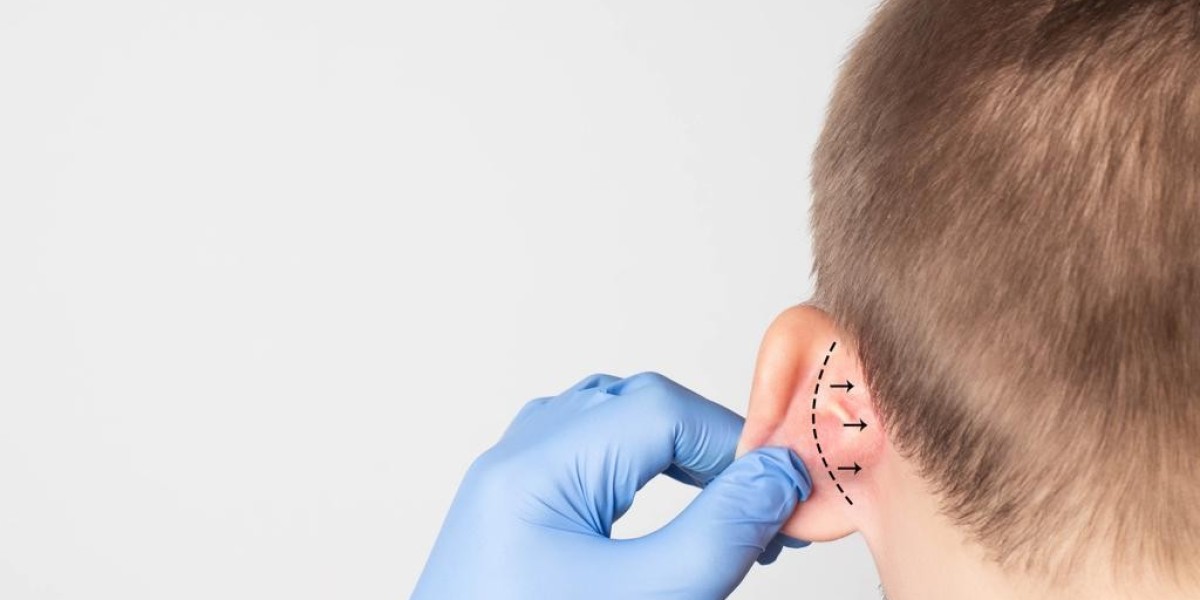

Earlobes may be small, but they play an important role in the overall balance and appearance of the ear. Trauma, heavy earrings, accidental tearing, congenital differences, or gradual tissue stretching can change the shape, size, or contour of the lobe. When the damage is significant, simple cosmetic adjustments may not be enough to restore a natural appearance. But can the procedure actually rebuild delicate ear structure? In many cases, it can reconstruct and reshape the earlobe by carefully repositioning and joining healthy tissue. The technique depends on whether the concern involves a split lobe, elongated piercing, stretched tissue, a missing section, or an irregular contour. However, earlobe correction is primarily a soft-tissue procedure. It should not be confused with major ear reconstruction involving cartilage. This is where Earlobe Correction Surgery in Dubai can provide a more structured approach to repairing damaged or altered soft tissue.
The extent of reconstruction therefore depends on the amount and quality of tissue available. During consultation, a qualified surgeon evaluates the lobe's anatomy, previous injuries or procedures, skin quality, and the desired shape before recommending an appropriate surgical technique.
Understanding what the procedure can realistically achieve is important for anyone considering correction. A well-planned repair aims to restore proportion, improve symmetry, and create a natural-looking contour while preserving as much healthy tissue as possible.
What Does Earlobe Correction Surgery Actually Rebuild?
The earlobe is composed mainly of skin and soft tissue rather than cartilage. This makes it possible for a surgeon to repair many forms of lobe damage using techniques designed to remove damaged edges, rearrange viable tissue, and close the area carefully.
For a completely or partially torn earlobe, the surgeon may freshen the separated edges before bringing the tissue together. If there is insufficient tissue for a straightforward closure, a local tissue rearrangement or flap technique may sometimes be considered.
The procedure can therefore rebuild the shape and soft-tissue framework of the earlobe, but it does not recreate complex cartilage structures of the external ear. Patients with extensive ear deformities involving cartilage require a different type of reconstructive assessment.
When Can Earlobe Correction Help Restore Ear Contour?
Earlobe correction may be considered when the lobe has been altered by several different causes. A torn earlobe following an injury is one of the most common concerns. Other patients may have stretched piercing holes, excessively elongated lobes, congenital irregularities, or asymmetry between the two ears.
The surgical plan changes according to the defect. A small stretched piercing may require less reconstruction than a fully divided lobe. Likewise, an old injury with scar tissue can require a more detailed approach than a recent tear.
The goal is generally not to make the ear look completely different. Instead, the surgeon works toward restoring a balanced contour that fits naturally with the surrounding ear.
What Happens During the Reconstructive Process?
A consultation usually begins with an examination of the affected lobe. The surgeon assesses tissue thickness, scarring, blood supply, symmetry, and the amount of tissue that remains.
For many repairs, local anaesthesia may be sufficient. The damaged or scarred tissue is carefully addressed, and the remaining healthy tissue is positioned to recreate the desired contour. Fine sutures are then used to support the repaired area.
More complex defects may require tissue rearrangement rather than a simple edge-to-edge closure. The precise method depends on the patient's anatomy and the extent of the damage.
Dynamic Life Clinic
Dynamic Life Clinic can be considered by patients seeking evaluation for earlobe deformities caused by trauma, stretched piercings, or changes in soft-tissue shape. An assessment allows the practitioner to determine how much viable tissue remains and what type of correction may be appropriate.
When Earlobe Correction Surgery is being considered, patients should discuss their previous injuries, procedures, piercing history, and expectations during consultation. These details can influence the surgical approach and the expected degree of reconstruction.
Skin111 Clinic
Skin111 Clinic offers an option for patients looking to have concerns involving the appearance and structure of the earlobe assessed. Earlobe correction can involve reshaping soft tissue, addressing irregular edges, and improving the contour created by previous damage.
The suitability of surgery depends on the individual defect. A consultation is therefore important, particularly when there is substantial tissue loss or significant scarring.
Tajmeels Clinic
Tajmeels Clinic may be considered for patients exploring surgical correction of stretched, torn, or uneven earlobes. The assessment should focus on the existing tissue and the specific structural problem rather than assuming that every lobe can be repaired using the same technique.
Patients can use the consultation to discuss symmetry, the preferred lobe shape, previous piercing damage, and whether they may eventually want to wear earrings again.
Esthetisch Centrum Jan van Goyen
Esthetisch Centrum Jan van Goyen can be another option for individuals seeking professional assessment of earlobe concerns. Surgical correction may be appropriate when the lobe has developed an irregular shape or has been damaged by trauma or prolonged stretching.
A qualified assessment is particularly relevant when the defect is extensive because the available soft tissue determines what type of reconstruction can realistically be performed.
Enfield Royal Clinic
Enfield Royal Clinic approaches Earlobe Correction Surgery as a procedure that should be planned around the individual anatomy rather than treated as a one-size-fits-all repair. During assessment, attention can be given to the shape, tissue condition, symmetry, and nature of the lobe defect.
For patients interested in reconstruction after tearing or stretching, a detailed consultation is important for determining whether direct repair or a more involved tissue-rearrangement technique is appropriate. The objective should be a proportionate and natural-looking result rather than simply closing the damaged area.
How to Choose the Right Clinic for Earlobe Correction Surgery
Choosing a clinic should involve more than looking at before-and-after photographs. Earlobe reconstruction is a surgical procedure, so the surgeon's experience, clinical assessment, and approach to tissue preservation matter.
Experience and Qualifications
Patients should ask about the surgeon's relevant surgical training and experience with earlobe repair and other soft-tissue procedures. Experience with different types of defects can be particularly useful when the lobe has substantial scarring or tissue loss.
Technology and Techniques
Although earlobe repair does not necessarily depend on advanced technology in the same way as some energy-based aesthetic treatments, surgical technique is important. Patients should ask what repair method is being considered and why it suits their anatomy.
Safety Standards
The procedure should be performed in an appropriate clinical environment with suitable infection-control and surgical safety protocols. Patients should also be informed about potential complications such as bleeding, infection, scarring, asymmetry, delayed healing, or recurrence of tearing.
Consultation Process
A proper consultation should involve examination of the lobe and an honest discussion about what can realistically be achieved. Patients should feel comfortable asking how much tissue can be preserved, what type of scar may result, and whether additional correction could ever be necessary.
Patient Experience
A good clinical experience includes clear communication before and after the procedure. Patients should understand the surgical process, healing expectations, restrictions, and when follow-up assessment is required.
Expected Results
The intended result is generally a repaired, proportionate earlobe with an improved contour. However, the final appearance depends on the original damage, tissue quality, scar formation, surgical technique, and individual healing response.
Frequently Asked Questions
Can Earlobe Correction Surgery rebuild a completely torn earlobe?
In many cases, a completely split earlobe can be surgically repaired by bringing healthy tissue together and reconstructing the contour. The exact technique depends on how much viable tissue remains and whether significant scarring is present.
Can it restore an earlobe after years of stretching?
Yes, stretched or elongated earlobes may be reshaped by removing or rearranging excess or damaged tissue. The appropriate technique depends on the extent of stretching and the quality of the remaining tissue.
Does Earlobe Correction Surgery rebuild cartilage?
Usually, no. The earlobe is primarily soft tissue and contains no substantial cartilage. Earlobe correction focuses on repairing and reshaping this soft tissue. Reconstruction involving the cartilage of the outer ear is a different and more complex procedure.
Can an irregular earlobe be made more symmetrical?
Surgery may improve noticeable asymmetry by reshaping the affected tissue. However, perfect symmetry cannot always be guaranteed because natural ears are not identical and healing can vary between individuals.
Can earrings be worn after earlobe reconstruction?
Patients generally need to allow the repaired tissue to heal before considering repiercing or wearing earrings. The appropriate timing should be determined by the treating surgeon because premature pressure on healing tissue may compromise the repair.
Conclusion
Earlobe damage does not always mean that the original contour is permanently lost. In suitable cases, Earlobe Correction Surgery can repair torn or stretched soft tissue and reconstruct a more natural earlobe shape. The procedure can be particularly useful when the concern is related to trauma, stretched piercings, tissue loss, or irregular contours.
However, its reconstructive capabilities have limits. It can reshape and restore earlobe soft tissue, but it is not equivalent to full external-ear reconstruction involving cartilage. The extent of correction depends heavily on the existing tissue and the nature of the defect.
A qualified surgical consultation remains the best way to determine whether reconstruction is appropriate and which technique can provide the most balanced and realistic result.