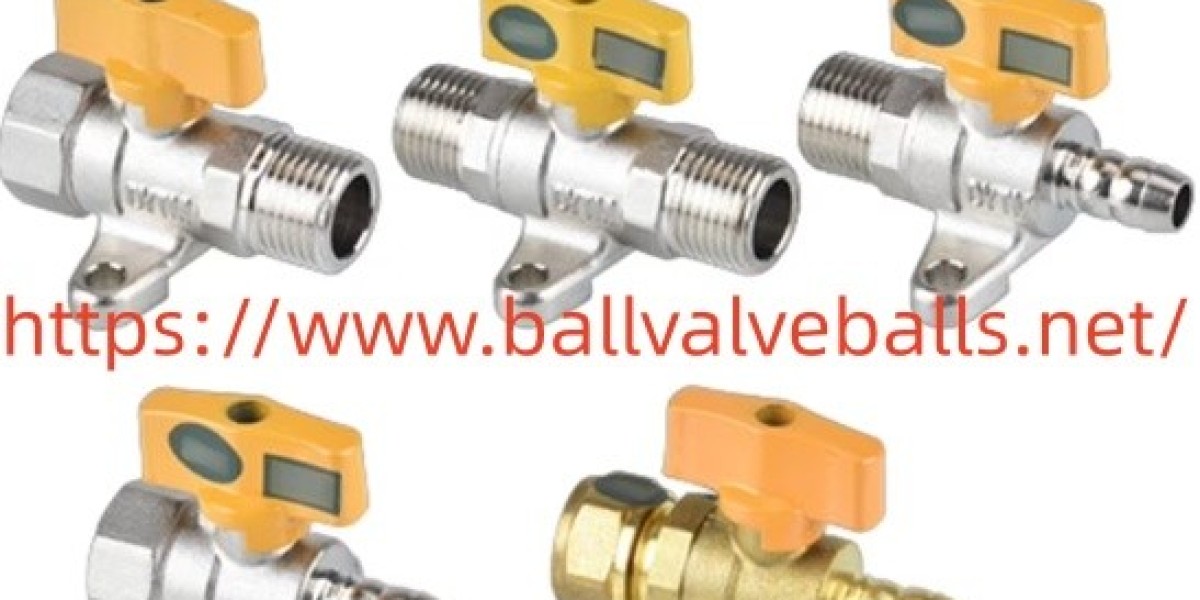

Ball Valve Fixed Ball refers to a spherical closure component that remains supported on a defined axis inside a flow-control assembly rather than moving freely with pressure. Its structure allows rotational movement while dedicated support points carry mechanical loads. This arrangement works together with seats, stems, bearings, and actuators to open or close a passage according to the requirements of an industrial process.
What Does Fixed Support Mean?
The main difference lies in how the sphere is positioned inside the assembly.
A floating design can move slightly toward one side when pressure acts on it. A fixed arrangement instead uses upper and lower support points to hold the sphere along a controlled axis. The sphere can still rotate, but it does not need to shift sideways to complete its operating cycle.
This changes how forces are distributed inside the equipment.
The supporting structure carries part of the mechanical load, while the sealing elements remain responsible for creating contact around the flow passage. Because these functions are separated, engineers can design the rotating mechanism and sealing arrangement around their individual roles.
This approach can be useful when an application requires a stable internal position during repeated operation.
How Does The Rotation Control Flow?
The spherical component contains a passage through its center. When that opening lines up with the pipeline, process media can pass through the assembly.
As an actuator or manual operator turns the stem, the sphere rotates around its supported axis. A quarter-turn movement brings the opening away from the flow path, placing the solid section across the passage.
The result is a simple transition between an open and closed position.
The movement can be performed manually or through pneumatic, electric, or hydraulic actuation, depending on the equipment configuration. The actuator does not need to move the entire sphere from one side to another. Instead, it provides rotational force around the established axis.
This operating principle makes the internal mechanism relatively straightforward to coordinate with external control equipment.
What Role Do The Support Points Play?
The upper and lower support points provide structural stability. They help keep the sphere centered while allowing rotational movement.
During operation, pressure from the process medium can create forces acting on the internal component. The support structure helps transfer these loads into the surrounding body rather than allowing the sphere to move freely toward a seat.
Bearings or bearing-like surfaces may be included between the rotating and stationary parts. Their purpose is to accommodate movement and manage friction within the mechanism.
The exact arrangement depends on the product design, dimensions, materials, and expected operating conditions.
For manufacturers, the relationship between the support structure and the rotating component is important because even small dimensional differences can influence assembly and movement.
How Does Sealing Take Place?
The sealing function comes from the interaction between the spherical surface and the surrounding seats.
When the passage is closed, the seats come into contact with the outer surface. Depending on the design, springs, process pressure, or a combination of mechanical forces can help maintain contact.
Because the sphere itself remains in a controlled position, the sealing elements can be designed to move toward the spherical surface rather than relying on the entire component to shift.
This arrangement can also influence operating force. When internal pressure is handled through the support structure, the rotational mechanism may experience a different load pattern from a floating arrangement.
Actual operating torque still depends on the complete assembly, including pressure, materials, surface condition, seat design, lubrication, and temperature.
Where Can This Structure Be Used?
Fixed spherical designs can be considered for various industrial flow-control applications where controlled isolation is required.
Potential uses include process pipelines, chemical production equipment, energy facilities, gas handling systems, petroleum-related installations, and industrial utility networks.
The appropriate configuration depends on the medium being transported and the conditions surrounding the equipment.
For example, abrasive particles may place additional demands on contact surfaces. High temperatures may affect material selection and dimensional relationships. Frequent cycling can also increase the importance of wear considerations.
Instead of treating one design as suitable for every environment, manufacturers should evaluate the complete operating situation before selecting internal components.
What Should Buyers Consider?
Several factors deserve attention when sourcing a fixed spherical component.
Material compatibility is important because the process medium may interact with the exposed surfaces.
Dimensional accuracy also matters because the component needs to correspond with the body, seats, stem, and support structure.
Surface treatment may be considered when the application involves repeated movement or abrasive conditions.
Operating conditions should include pressure, temperature, flow characteristics, and movement frequency.
Assembly requirements should also be reviewed. A component that appears suitable by basic dimensions may still require adjustments if its connection or support arrangement does not match the surrounding parts.
Providing detailed application information to a component supplier can make the selection process more practical.
How Can Ballvalveballs Support Component Sourcing?
Ballvalveballs provides spherical components for manufacturers working with industrial flow-control equipment. Buyers can consider factors such as material, surface treatment, dimensions, support arrangement, and intended operating environment when selecting suitable products.
A thoughtful sourcing process begins with understanding the complete assembly rather than looking at one component separately. The sphere, seats, stem, supports, and actuator all need to cooperate within the intended operating conditions.
Ballvalveballs offers product options for different industrial applications, allowing manufacturers to consider components according to their own equipment requirements. The product range is available at https://www.ballvalveballs.net/ providing a convenient starting point for businesses reviewing spherical components for flow-control assemblies.