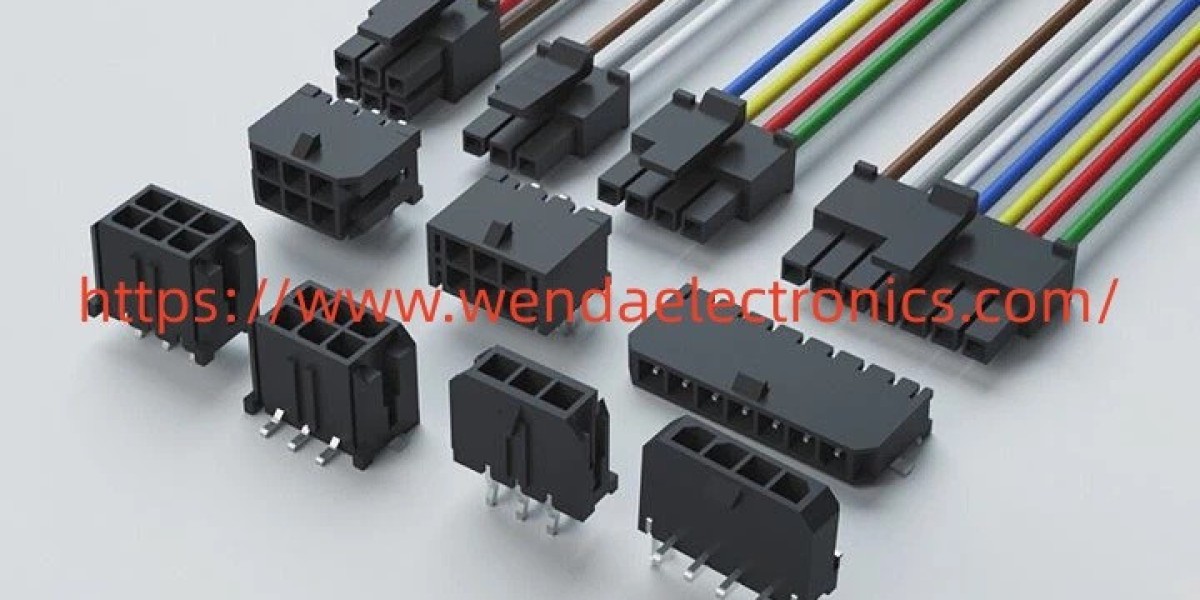

BTB Power Connector can help address several hidden challenges that appear when electronic systems use multiple printed circuit boards. These issues are not always visible during the early design stage. Wiring congestion, difficult board alignment, limited enclosure space, mechanical stress, maintenance access, and thermal considerations can all influence the final assembly. A suitable board level connection approach gives engineers another way to organize these concerns within a modular electronic structure.
Hidden Wiring Complexity
One common challenge appears when separate boards need to exchange electrical power through individual wires or cable assemblies. Additional wiring can occupy valuable internal space and introduce more assembly steps.
Direct board to board connections can shorten the physical path between circuit boards. This can make the internal structure easier to organize, particularly when several functional modules must operate inside a compact enclosure.
Reducing unnecessary wiring can also make production teams less dependent on manual cable routing. This does not remove the need for careful PCB design, but it can simplify the physical arrangement of the finished assembly.
Difficult Board Alignment
Multiple PCB systems require accurate positioning during assembly. Even when the electrical design is correct, small mechanical deviations can make mating more difficult.
Guide structures and suitable connector geometry can help control the relationship between two boards. Engineers should consider the complete mechanical assembly rather than looking at the connector separately.
Board supports, mounting holes, enclosure features, connector position, and insertion direction all influence the final result. Early coordination can reduce problems that might otherwise appear during prototype assembly.
Limited Internal Space
Electronic equipment continues to use increasingly compact internal layouts. When cables, separate harnesses, and large connection structures occupy space, designers have fewer options for arranging functional modules.
A direct board connection can support stacked, parallel, or other compact board arrangements depending on the application. This approach may help engineers use available enclosure volume more effectively.
The benefit is not simply smaller packaging. A well planned modular structure can also create clearer boundaries between processing, power management, communication, and control sections.
Mechanical Stress During Assembly
A hidden challenge involves the forces created when two boards are connected or separated. If the mating process transfers excessive force to the PCB, solder joints and nearby components may experience unwanted mechanical loading.
For this reason, connector selection should be considered together with PCB thickness, support structures, board dimensions, and assembly direction.
Wendaelectronics focuses on board level interconnection products intended for electronic applications where mechanical design and electrical connection need to work together. Careful integration remains important because connector performance depends on the surrounding assembly as well as the component itself.
Thermal Conditions Around Power Paths
Power transmission introduces another design consideration. Electrical resistance at contact points can contribute to localized heat, while surrounding PCB copper, airflow, enclosure design, and ambient conditions influence overall thermal behavior.
Engineers therefore need to evaluate the complete current path rather than looking only at a connector rating. PCB traces, vias, contact interfaces, and power planes can all contribute to the final thermal condition.
This system level approach can help identify potential hot spots during development and provide a clearer basis for component selection.
Maintenance Can Become Complicated
Some electronic products contain several functional boards that may require inspection or replacement during their service life. When every module is connected through separate wiring, maintenance can involve additional disconnection and cable management.
A modular board structure can make individual sections easier to separate when the mechanical architecture has been designed for service access.
This is particularly useful for equipment where different electronic modules have different development or replacement cycles. Designers can consider the connection architecture as part of the product maintenance strategy rather than treating it as a simple electrical detail.
Manufacturing Consistency Matters
Production teams also face hidden challenges when assembling multi-board systems. Cable routing, manual insertion, connector orientation, and board positioning can introduce opportunities for assembly variation.
A clearly defined board level connection arrangement can reduce some of this complexity. Automated placement and controlled assembly procedures can then be planned around a repeatable mechanical structure.
However, successful manufacturing still depends on PCB tolerances, soldering conditions, component placement, inspection, and appropriate process controls. The connection solution is one part of a larger production system.
Modular Architecture Supports Product Development
Another advantage comes from separating electronic functions into different modules. Instead of placing every circuit on one large PCB, designers can divide functions according to the architecture of the equipment.
This can support product variations where certain modules change while other sections remain similar. It may also make prototype development easier because individual boards can be evaluated separately before final system integration.
The connection between these modules then becomes an important part of the overall architecture. Electrical requirements, mechanical dimensions, service access, and manufacturing processes should all be considered together.
How Wendaelectronics Supports Electronic Design Projects
Choosing a board level power connection should begin with the actual application rather than a single specification. Engineers should review electrical requirements, PCB arrangement, available enclosure space, mating direction, mechanical support, thermal conditions, and production processes before finalizing a design.
Wendaelectronics provides interconnection solutions for electronic applications where compact layouts and organized PCB integration are important considerations. For businesses reviewing available products and connection options, the https://www.wendaelectronics.com/product/ provides a practical starting point for project evaluation.