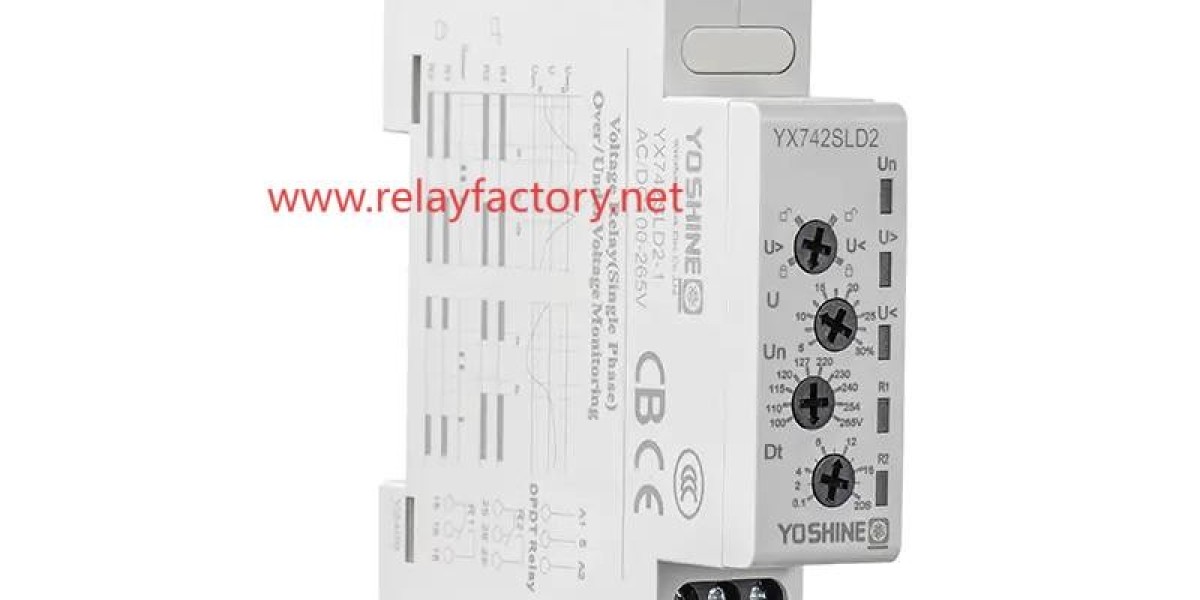

Custom Time Relay applications can be found across many industries where electrical equipment needs to operate according to a planned sequence. Manufacturing, building services, water systems, packaging equipment, agricultural machinery, and commercial facilities may all require controlled delays or timed switching. Instead of treating timing as a separate feature, engineers often consider it as part of the overall control strategy.
Manufacturing and Factory Automation
Production equipment often contains several actions that need to happen in a particular order. A motor may need to start after another component has reached a certain condition. A conveyor may need to wait before moving materials, while an actuator may require a short delay before another operation begins.
Timing components can provide a straightforward way to coordinate these actions. They can be used alongside contactors, sensors, switches, and other control devices to create defined sequences without changing the entire control structure.
For machine builders, this can be useful when developing equipment with repeated operating cycles. The timing arrangement can be planned around the actual movement and working rhythm of the machine.
HVAC and Building Services
Heating, ventilation, and air conditioning systems also involve many timed operations. Fans, pumps, compressors, ventilation equipment, and auxiliary devices may not need to start or stop at exactly the same moment.
A timed control device can introduce a delay between different actions. For example, ventilation equipment may continue running for a period after another system stops, or an auxiliary fan may start after a predefined interval.
Commercial buildings, workshops, warehouses, and other facilities can therefore use timing functions as part of their electrical control arrangements.
Pumping and Water Treatment
Water systems frequently rely on motors and pumps that operate according to specific cycles. A control sequence may require a pump to start after another operation has finished or remain active for a defined period.
Timing control can also be useful when several pieces of equipment need to work in sequence. This can apply to water supply equipment, drainage systems, circulation systems, and certain treatment processes.
The exact timing requirements depend on the equipment and process, so buyers should select a solution according to the electrical design and operating conditions rather than choosing a component based only on appearance.
Packaging and Processing Equipment
Packaging machinery often performs a series of repeated movements. Feeding, positioning, sealing, cutting, labeling, and conveying can involve carefully coordinated intervals.
Timing components can support individual control tasks within these machines. A delay may allow one operation to finish before the next begins, while cyclic timing can support repeated equipment actions.
This type of application is particularly relevant to machine manufacturers and automation integrators that build equipment around specific production processes. The timing function needs to match the machine sequence and should be confirmed during system testing.
Lighting and Commercial Facilities
Timed switching is not limited to industrial machinery. Commercial buildings may use timing functions for corridor lighting, exterior lighting, warehouse areas, signs, ventilation equipment, and other electrical loads.
For facilities with predictable operating schedules, timed control can reduce the need for constant manual switching. It can also help separate different lighting zones or equipment groups according to how the building is used.
The same principle can be applied to offices, workshops, storage areas, parking facilities, and other commercial environments where equipment follows regular operating patterns.
Agricultural and Environmental Equipment
Agricultural systems can also involve equipment that operates at scheduled intervals. Pumps, fans, irrigation equipment, ventilation systems, and other machinery may need controlled starting or stopping.
Timing control can help coordinate these devices according to the requirements of the installation. Since environmental conditions and equipment loads vary between projects, the control arrangement should be evaluated together with the electrical system.
This makes communication between the equipment builder, installer, and component supplier particularly important during product selection.
What Should Buyers Consider?
The right timing solution depends on the actual application. Before purchasing, buyers should review the required timing function, operating voltage, contact arrangement, installation method, switching load, environmental conditions, and expected operating cycle.
It is also useful to consider how the component will fit into the existing control panel. Clear wiring arrangements and accessible settings can make installation and later maintenance easier.
For OEM projects, communication about drawings, samples, labeling, packaging, and production quantities can also help create a smoother purchasing process.
Relayfactory works with buyers seeking timing and relay products for different electrical control applications. Its product range can be considered by machine builders, electrical distributors, system integrators, and project purchasers according to their specific application requirements.
A Practical Approach to Industry Selection
There is no single application pattern for timing control. A factory automation system may require sequencing, while a ventilation installation may need delayed shutdown. A pump system may use scheduled operation, whereas packaging equipment may depend on repeated cycles.
For this reason, buyers should begin with the actual operating process and then determine which timing function fits that process. This application-based approach can help avoid unnecessary functions and make component selection more practical.
Timed electrical control has a place in many modern industries because machines and facilities often need actions to occur at specific intervals. Manufacturing, HVAC, pumping, packaging, lighting, agriculture, and commercial building systems can all benefit from carefully planned timing arrangements.
For businesses sourcing relay products, evaluating the application, electrical requirements, installation environment, and control sequence can provide a clearer basis for purchasing decisions. Relayfactory offers related products for buyers comparing solutions across different industrial and commercial applications. The available product range can be reviewed here https://www.relayfactory.net/product/