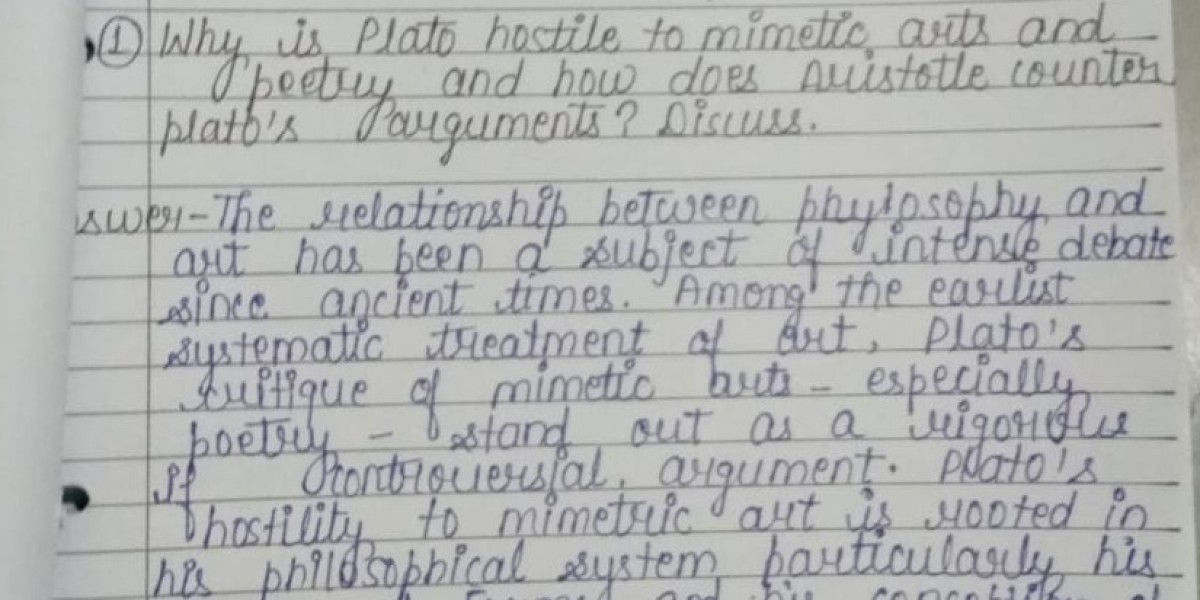

Creating an Indira Gandhi National Open University IGNOU Handwritten Assignment using study notes requires blending strict academic formatting with effective synthesis. Assignments carry 30% weightage toward your final grade and serve as a mandatory prerequisite for appearing in the Term-End Examinations (TEE).
Below is a complete, step-by-step guide to transforming IGNOU study material and handwritten notes into a high-scoring, fully compliant assignment.
Step 1: Pre-Writing Requirements & Setup
Before writing a single word, assemble the correct structural materials mandated by university guidelines:
A4 Sheets: Use standard A4 size ruled paper. Write on both sides, leaving a 4 cm (1.5-inch) margin on the left side reserved for the evaluator’s comments and marks.
Writing Instruments: Use Blue or Black ink only for text. Black ink works best for headings and subheadings, while blue ink should be used for the body content. Never use red or green ink, as these are reserved for official marking.
Single Handwriting: Ensure the entire assignment is written in one handwriting style. Submissions with mismatched handwriting across sections risk rejection or queries during evaluation.
Step 2: Assembling Front-Matter Documents
Every course assignment must be stapled or tied separately with three core documents attached in exact order:
Cover / Front Page: Contains mandatory student details:
Enrolment Number (Double-check every digit)
Student Name & Full Postal Address
Programme Code & Programme Title (e.g., BAG, MBA, MEG)
Course Code & Course Title (e.g., BPSC-131, MEC-101)
Assignment Code (Printed on the assignment booklet)
Regional Centre & Designated Study Centre Code
Current Session (e.g., July 2025 / January 2026)
Date of Submission & Student Signature
Official Question Paper: Attach a printout of the official assignment question paper downloaded directly from the IGNOU portal for your specific session.
IGNOU Student ID Card Copy: A self-attested photocopy of your IGNOU student identity card.
Step 3: Transforming Handwritten Notes into Assignment Answers
Simply copying study notes or textbook paragraphs word-for-word can lead to zero marks for plagiarism. Convert raw handwritten notes into structured academic responses using this methodology:
1. Content Synthesis & Paraphrasing
Read the block units provided in the IGNOU study materials alongside your personal handwritten notes.
Rephrase key concepts in your own words. Show personal understanding rather than reproducing verbatim texts.
2. Strictly Adhere to Word Limits
Long Answers (20 Marks): 500–800 words. Focus on conceptual depth, critical analysis, and structural clarity.
Medium Answers (10 Marks): 250–300 words. Direct explanations with core points highlighted.
Short Notes (5 Marks): 100–150 words. Concise, point-to-point definitions or overviews.
3. Standard Answer Structure
Structure every answer into three clear phases:
Introduction: Briefly define the topic, core terminology, or background context (10–15% of word count).
Main Body: Divide into structured paragraphs using subheadings, bullet points, or numbered lists. Incorporate relevant real-world examples, theoretical models, or simple diagrams where appropriate.
Conclusion: Summarize the core findings or key insights without introducing new concepts (10% of word count).
Step 4: Page Layout & Presentation Best Practices
Visual clarity directly influences evaluation ease:
Question Identification: Write the exact question number prominently in the center or left margin before commencing each answer. You do not need to rewrite long questions fully if time is constrained, but typing or copying the question verbatim in bold black ink is recommended for clarity.
Page Numbering: Number every page sequentially (e.g., Page 1 of 25) at the bottom corner to prevent page displacement.
Spacing & Cleanliness: Leave a 2-line gap between questions. If you make a handwriting mistake, draw a clean single line through the text rather than heavy overwriting or messy scribbles.
Step 5: Binding, Checking & Final Submission
Once writing is complete, perform a final audit before physical or digital submission:
Binding: Tie the pages securely using tag strings through punched holes on the top-left corner, or staple them cleanly. Avoid using plastic folders, sliding clips, or spiral binding, as study centers frequently remove and discard outer covers.
Course Isolation: Prepare each course assignment as an independent file. Never bind two or more courses into a single physical booklet.
Physical Submission: Submit your completed assignment directly to your designated Study Centre (LSC) Coordinator. Always collect a stamped and signed Acknowledgement Slip as legal proof of submission.
Digital/Online Submissions: If your Regional Centre mandates digital submission via Google Forms or a dedicated portal, scan the physical pages using a document scanner app (such as Adobe Scan). Create a single clear PDF file per course (Front Page → Question Paper → Answers) and ensure file sizes remain within prescribed upload limits.
Quick Mistakes to Avoid
| Common Error | Impact | Corrective Action |
| Typed/Printed Answers | Automatic Rejection | Write every answer manually by hand. |
| Wrong Session Question Paper | Zero Marks / Cancellation | Download questions matching your current academic session. |
| Direct copying from books | Penalized for Plagiarism | Synthesize concepts and write in your own phrasing. |
| Missing Submission Receipt | No proof if marks fail to update | Retain a physical copy and the signed submission receipt. |
If you make first IGNOU Solved Assignment as per tips then you will definitely get better marks.